Baytown Car Accident Attorney

A Baytown car accident attorney from Sutliff & Stout fights for injured victims who need someone in their corner while recovering from traumatic collisions that disrupt every part of daily life. Texas law imposes a two-year deadline for filing personal injury claims, creating pressure to act while dealing with mounting medical bills, lost wages from missed work, and insurance adjusters seeking recorded statements. Harris County roadways see thousands of collisions annually, with injured parties often discovering their own insurance provides inadequate coverage and at-fault drivers disputing liability through their carriers.

Baytown car accident lawyers address these urgent matters through systematic investigation of collision scenes, analysis of police reports and witness statements, and coordination with medical providers to document the full extent of injuries and necessary treatment. Attorneys handle all communication with insurance companies to prevent statements that could undermine claim value. They collect traffic camera footage, vehicle damage photographs, and opinions on accident reconstruction before evidence disappears. Legal representation ensures compliance with filing deadlines, proper valuation of both current and future medical needs, and pursuit of the fair compensation injured victims are entitled to from responsible parties through settlement negotiations or trial proceedings.

The benefits of hiring a Baytown car accident lawyer are listed below:

  • Thorough investigation of crash scenes and evidence preservation before critical details are lost
  • Professional analysis of police reports, medical records, and insurance policy language
  • Fair compensation pursuit for medical expenses, lost income, and related damages
  • Strategic negotiation with insurance companies and their adjusters
  • Access to accident reconstruction specialists, medical experts, and economic analysts
  • Protection from insurance tactics designed to minimize claim values
  • Complete case management from initial filing through resolution
  • Understanding of Texas proportionate responsibility laws affecting settlements
  • Experience with serious injury cases requiring extensive medical treatment
  • Timely filing of all legal documents and meeting court deadlines
Hero Background
Free Case Evaluation

Our highly experienced lawyers will contact you for a Free Legal Consultation.

Million Dollar Advocates Forum
Top 100 Trial Lawyers
Hank Stout - Elite Lawyer
Super Lawyers
Board Certified

Baytown Car Accident Attorney Reviews

Collaborating with Sutliff & Stout car accident attorneys in Baytown offers numerous benefits, perks, and advantages for collision victims seeking legal representation.

JJ

Judy J.

Google Reviewer

I was in a terrible car wreck, one that could have ruined me considering today’s economy. After searching far and wide, I finally found Sutliff & Stout. Their character and high morals were exemplified in my legal representation against huge power company. Through their expertise, I received proper medical care plus the money I needed to pay for future medical treatment and secure my financial future.

CF

Cassie F.

Google Reviewer

The Sutliff & Stout Law Firm helped me when I needed it the most with true professionalism and courtesy. After my child was injured at a daycare, Sutliff & Stout helped me make the best decisions possible. I would definitely recommend Sutliff & Stout to anyone that needs legal assistance. I wouldn’t even dare think of calling any other attorney.

DM

Daisie M.

Google Reviewer

I cannot thank Sutliff & Stout enough for the way they handled my case in a very professional yet caring manner. They treated me more as a friend than as a client. Their endearing ways in dealing with clients show how much they genuinely care. They resolved my case as soon as possible because they didn’t want me to go through any further hardship after already losing my daughter. In my time of need, Sutliff & Stout was there for me.

CF

Chris F.

Google Reviewer

When ten different attorneys gave me the cold shoulder, Sutliff & Stout warmly accepted me and my case. When I thought there was no hope for me, Hank and Graham worked extremely hard, for a very long time, in order to put me in a position to convince the city to settle. Without Sutliff & Stout, I would not have been treated fairly and would have significant debts as a result of the collision.

SC

Susan C.

Google Reviewer

I suffered a neck injury that kept me out of work for a long time. The good news was that I didn’t have any bills afterwards; even my hospital and my ambulance bills were paid for after my accident. The insurance company settled once Sutliff & Stout boldly showed them we were prepared to try the case. I will always go to Sutliff & Stout.

Best Car Accident (Injury) Lawyer Baytown, Near Me

Sutliff & Stout brings decades of combined trial experience to collision cases throughout Harris County. The firm understands how crash victims face mounting medical bills, lost wages, and insurance company tactics designed to minimize payouts. Sutliff & Stout builds strong cases through thorough accident reconstruction, medical expert consultation, and aggressive negotiation with insurers.

Sutliff & Stout handles every aspect of collision claims, from initial investigation through trial if settlement negotiations fail. The firm coordinates with medical providers to document injuries, secures accident scene evidence before it disappears, and retains experts who can testify about liability and damages. Sutliff & Stout works directly with clients to pursue the fair compensation they are entitled to for injuries caused by negligent drivers.

  • Group 336

    Graham E. Sutliff

    Co-Founder

  • Graham E. Sutliff

    Hank Stout

    Co-Founder

  • Matthew Ploeger

    Matthew Ploeger

    Attorney

  • Group 334

    Jaime Perez

    Attorney

  • Kelly M. Walne

    Kelly M. Walne

    Attorney

  • Natisha Hales

    Natisha Hales

    Personal Injury Attorney

  • Randy Stout

    Randy Stout

    Former District Judge

Advantages of Working with Sutliff & Stout Car Accident Lawyers in Baytown

Sutliff & Stout fights for car accident victims against insurance companies who try to minimize payouts and shift blame. The firm’s attorneys bring over 50 years of combined litigation experience to every case in Harris County.

  • No Upfront Fees and Transparent Contingency Structure

    Sutliff & Stout charges no upfront fees. Clients pay nothing unless the firm recovers compensation on their behalf, making quality legal representation accessible to everyone.

  • Fearless Trial Representation

    When insurance companies refuse to offer fair compensation, Sutliff & Stout takes cases to trial. The firm prepares every case from the start as if a jury will decide the outcome.

  • Highly Rated by Clients

    Sutliff & Stout has earned consistently strong reviews from car accident clients throughout Harris County who credit the firm with securing the fair recovery they deserved after serious collisions.

  • Extensive Experience and Proven Track Record

    Sutliff & Stout brings over 50 years of combined experience to every case and has recovered more than $1 billion in verdicts and settlements for car accident victims in Houston.

  • Personalized Attention and Client Focus

    Every client at Sutliff & Stout receives direct, attentive communication throughout their case. The firm prioritizes keeping clients informed and involved at every stage of the legal process.

  • Board-Certified and Highly Recognized Attorneys

    Sutliff & Stout attorneys hold board certifications in personal injury trial law, a distinction earned by a small percentage of attorneys practicing in Texas courts.

  • 24/7 Availability and Accessibility

    Sutliff & Stout is reachable around the clock because car accident emergencies do not follow business hours. Clients can count on responsive communication whenever questions or concerns arise.

  • Aggressive but Compassionate Representation

    Sutliff & Stout pursues every available avenue to secure fair compensation while treating clients with genuine care and respect throughout what is often a difficult and stressful recovery period.

  • Successful Handling of Various Accident Types

    From rear-end collisions to multi-vehicle highway crashes, Sutliff & Stout has successfully resolved a wide range of car accident claims for injured victims across Harris County.

  • Comprehensive Support Beyond Legal Representation

    Sutliff & Stout connects clients with medical providers, coordinates treatment documentation, and helps address practical concerns that arise after a crash, supporting clients well beyond courtroom and negotiation matters.

Types of Compensation a Car Accident Attorney in Baytown Pursues

The settlement figures below reflect potential recovery ranges drawn from successful Texas car accident cases and negotiations. No fixed formula determines individual awards since each collision involves distinct facts, injuries, and circumstances. Recovery amounts depend on injury severity, liability assessment under Texas’s modified comparative fault statute, and case-specific factors. Similar injuries may produce varying outcomes based on personal impact on employment, family, and quality of life. These ranges represent possible results rather than guaranteed awards for any particular claim.

Don't Wait - Time Is Critical

Texas has a 2-year statute of limitations. Every day you wait could cost you thousands in compensation.

  • Medical expenses following car accidents in Baytown include emergency room treatment, diagnostic imaging, surgical procedures, and ongoing care costs. Hospital bills accumulate quickly after collisions, covering ambulance transport, specialist consultations, prescription medications, and physical therapy sessions. Texas law permits recovery of all past and future medical costs directly caused by the crash. Attorneys compile treatment records and negotiate with healthcare providers to protect your financial recovery. Your car accident medical claim requires thorough documentation of every medical service received after the collision.

  • Lost income represents a significant portion of damages when car accident injuries prevent working in Baytown. Employers verify missed shifts, reduced hours, and unpaid leave through official documentation submitted during the claims process. Your car accident lost wages claim covers salary, hourly pay, commissions, bonuses, and self-employment income lost due to crash-related injuries. Attorneys calculate wage losses by analyzing pay stubs, tax returns, and employment contracts proving pre-accident earnings. Texas courts recognize both full-time and part-time workers deserve fair compensation when injuries disrupt their ability to earn income.

  • Permanent injuries reduce future earning potential when victims cannot return to previous occupations or must accept lower-paying positions after Baytown car crashes. Vocational professionals analyze job skills, education levels, physical limitations, and labor market conditions to calculate lifetime income reductions. Earning capacity vs loss of future earnings represents distinct legal concepts, with earning capacity addressing reduced ability to work rather than specific wages lost. Attorneys work with economic witnesses to establish the present value of decades of diminished income caused by lasting impairments.

  • Physical pain, discomfort, and reduced quality of life constitute compensable damages following car accidents in Baytown. Juries evaluate the severity, duration, and impact of injuries on daily activities when determining non-economic damage awards. Pain and suffering car accident compensation addresses chronic pain, limited mobility, sleep disruption, and inability to enjoy previous hobbies or activities. Texas proportionate responsibility rules require proving the defendant’s negligence caused your injuries and suffering. Attorneys present medical testimony, treatment records, and personal impact statements demonstrating how crash injuries altered your life permanently.

  • Psychological trauma from car accidents produces anxiety, depression, post-traumatic stress, and emotional suffering requiring professional mental health treatment. Mental health providers document symptoms through clinical evaluations, therapy notes, and diagnostic assessments supporting your injury claim. An emotional distress car accident settlement compensates victims for fear, humiliation, sleep disorders, and relationship difficulties caused by the collision. Texas courts recognize emotional injuries as legitimate damages when supported by medical evidence and expert testimony. Therapists and psychiatrists quantify psychological harm by describing treatment duration, medication needs, and long-term prognosis for recovery.

  • Vehicle repair costs, replacement value, and personal property losses qualify for recovery when collisions damage your automobile in Baytown crashes. Car accident lawyer property damage claims include diminished value compensation when repairs reduce your vehicle’s market worth below pre-crash conditions. Texas law permits recovery of rental car expenses during repair periods and total loss settlements based on fair market value before the collision. Attorneys obtain repair estimates, appraisals, and documentation proving the full extent of vehicle damage.

  • Permanent facial scars, burn injuries, and visible disfigurement cause lasting physical and emotional harm that Texas law recognizes as compensable damages separate from medical treatment costs. Scarring and abrasions from a car accident affect employment prospects, social interactions, and psychological well-being throughout a victim’s lifetime. Juries consider scar location, size, visibility, and impact on daily activities when determining fair compensation for disfigurement. Attorneys present medical testimony, photographs, and life care plans documenting how permanent scarring alters a victim’s life in Baytown communities.

  • Spouses suffer distinct harm when serious injuries damage marital relationships, affecting companionship, affection, and intimate relations that Texas law permits family members to recover. Consortium damages compensate the uninjured spouse for loss of services, society, and conjugal relationship caused by the injured partner’s disabilities. Courts recognize these claims as separate from the injured person’s damages, allowing both spouses to pursue recovery. Attorneys establish consortium losses through testimony about relationship changes, daily life impacts, and permanent alterations to family dynamics.

  • Punitive damages in a car accident apply when a defendant’s conduct involves malice, fraud, or gross negligence, with caps set at the greater of two times economic damages plus noneconomic damages not exceeding $750,000, or $200,000. These damages punish particularly egregious behavior beyond ordinary negligence. Baytown courts award punitive damages rarely, reserving them for drunk driving crashes, intentional collisions, or extreme recklessness. Juries deliberate on punitive damages without knowledge of statutory caps during trial proceedings.

  • Ongoing treatment needs following car accidents create substantial future expenses that Texas law allows victims to recover through medical expert testimony and life care planning. Physicians project costs for surgeries, medications, therapy sessions, and assistive devices required over your lifetime. Attorneys work with medical economists to calculate present value of future care, ensuring settlements cover decades of treatment needs. Chronic conditions, permanent disabilities, and traumatic brain injuries generate the highest future medical cost awards in Baytown cases.

  • Transportation costs, prescription medications, medical equipment, and home modifications create recoverable damages beyond standard medical bills after Baytown car crashes. Out-of-pocket expenses after car accident incidents include mileage to doctor appointments, over-the-counter medications, crutches, wheelchairs, and household help during recovery. Texas courts require documentation through receipts, mileage logs, and expense records proving crash-related costs. Attorneys compile these smaller expenses into substantial claims when injuries require extended recovery periods.

  • Wrongful death compensation claims in Texas may be brought by surviving spouses, children, and parents of the deceased, with siblings excluded from beneficiary status, and executors filing suit if beneficiaries do not act within three months of death. These claims recover funeral expenses, lost financial support, loss of companionship, and mental anguish suffered by family members. Liability exists when wrongful acts, neglect, carelessness, unskillfulness, or default cause fatal injuries. Baytown wrongful death cases demand thorough investigation of crash circumstances and calculation of lifetime earning capacity.

  • Injuries preventing victims from performing household tasks create recoverable damages for childcare, cooking, cleaning, yard maintenance, and home repairs that others must now handle. Texas recognizes the economic value of domestic services lost when car accident injuries disable victims temporarily or permanently. Attorneys calculate these damages by estimating replacement costs for services the injured person provided before the crash. Severe injuries requiring years of outside help generate substantial household services claims in Baytown courts.

Common Injuries in Baytown Car Accidents

Common injuries in Baytown car accident cases create devastating physical, emotional, and financial consequences requiring thorough medical treatment and legal representation.

  • Common Symptoms

    • Neck stiffness and reduced range of motion
    • Headaches radiating from base of skull
    • Shoulder and upper back pain
    • Dizziness and difficulty concentrating

    Settlement Value Factors

    • Duration and frequency of medical treatment received
    • Imaging evidence showing ligament damage or inflammation
    • Lost wages from missed work during recovery
    • Impact on daily activities and quality of life
    • Need for ongoing physical therapy or pain management
    • Whether symptoms became chronic or permanent

    Required Documentation

    • X-rays and MRI scans of cervical spine
    • Physical therapy progress notes and discharge summaries
    • Orthopedic or neurologist evaluation reports
    • Employer documentation of missed work days
    • Pain management treatment records
    • Functional capacity evaluation results
    Claim Impact

    Whiplash claims require documented medical imaging and consistent treatment records to establish injury severity and prevent insurance denials.

    Defense Strategy

    Insurance companies challenge whiplash claims by arguing pre-existing degenerative conditions caused symptoms rather than the collision.

    Get Legal Help for Your Whiplash Case

    Our experienced attorneys understand Whiplash cases and fight for maximum compensation.

  • Common Symptoms

    • Visible deformity or abnormal limb positioning
    • Severe pain at fracture site
    • Swelling and bruising around broken bone
    • Inability to bear weight or use affected limb
    • Grinding sensation during movement
    • Numbness below injury site

    Settlement Value Factors

    • Surgical intervention required and hardware implanted
    • Number of bones fractured in single incident
    • Complications during healing process or infections
    • Permanent limitations on mobility or strength
    • Scarring from surgical incisions and procedures
    • Need for future hardware removal or revision surgery

    Required Documentation

    • Emergency room records and initial X-rays
    • Surgical operative reports and hardware specifications
    • Follow-up imaging showing bone healing progression
    • Physical therapy evaluations and progress notes
    • Orthopedic surgeon's prognosis and restrictions
    • Vocational assessment if work capacity affected
    Claim Impact

    Types of fracture documentation must include surgical reports, hardware placement records, and orthopedic assessments showing whether healing complications occurred.

    Defense Strategy

    Insurance adjusters minimize fracture claims by arguing bone density issues or osteoporosis contributed to breaks rather than collision impact alone.

    Get Legal Help for Your Broken Bones Case

    Our experienced attorneys understand Broken Bones cases and fight for maximum compensation.

  • Common Symptoms

    • Persistent headaches and sensitivity to light
    • Memory loss and difficulty concentrating
    • Mood changes and personality shifts
    • Balance problems and coordination issues
    • Sleep disturbances and chronic fatigue
    • Slurred speech or communication difficulties

    Settlement Value Factors

    • Glasgow Coma Scale score at accident scene
    • Duration of loss of consciousness after impact
    • Cognitive deficits documented through neuropsych testing
    • Need for assisted living or long-term care
    • Loss of earning capacity and career changes
    • Impact on family relationships and daily independence

    Required Documentation

    • CT scans and MRI showing brain injury
    • Neuropsychological evaluation battery results
    • Neurologist treatment records and prognosis
    • Life care plan from rehabilitation professional
    • Vocational expert assessment of work capacity
    • Economic expert calculation of lifetime losses
    Claim Impact

    Traumatic brain injuries caused by car accidents require neuropsychological testing, brain imaging, and expert testimony to establish cognitive deficits and future care needs.

    Defense Strategy

    Insurance companies dispute TBI claims by attributing symptoms to pre-existing mental health conditions or arguing injuries resolved within weeks.

    Get Legal Help for Your Traumatic Brain Injuries (TBIs) Case

    Our experienced attorneys understand Traumatic Brain Injuries (TBIs) cases and fight for maximum compensation.

  • Common Symptoms

    • Loss of movement in extremities
    • Loss of sensation below injury level
    • Bladder and bowel control problems
    • Difficulty breathing without assistance
    • Muscle spasms and exaggerated reflexes
    • Sexual dysfunction and fertility issues

    Settlement Value Factors

    • Completeness of spinal cord injury (complete vs incomplete)
    • Level of injury on spinal column (cervical vs thoracic)
    • Need for ventilator support or breathing assistance
    • Home modifications required for wheelchair accessibility
    • Lifetime attendant care and nursing needs
    • Risk of secondary complications like pressure sores

    Required Documentation

    • Emergency spine imaging and surgical reports
    • Neurological examination documenting deficit levels
    • Life care plan detailing future medical costs
    • Occupational therapy home assessment reports
    • Durable medical equipment cost projections
    • Economic analysis of lifetime care expenses
    Claim Impact

    Spinal cord injury claims demand immediate imaging, surgical records, and life care plans quantifying decades of medical expenses and attendant care.

    Defense Strategy

    Insurance carriers challenge spinal injury severity by hiring independent medical examiners who argue partial recovery potential exists.

    Get Legal Help for Your Spinal Cord Injuries Case

    Our experienced attorneys understand Spinal Cord Injuries cases and fight for maximum compensation.

  • Common Symptoms

    • Abdominal pain and tenderness
    • Swelling and bruising across torso
    • Difficulty breathing or chest pain
    • Dizziness from blood loss
    • Nausea and vomiting blood
    • Rapid heart rate and low blood pressure

    Settlement Value Factors

    • Number of organs damaged in single incident
    • Emergency surgical intervention required
    • Blood transfusions needed during treatment
    • Development of infections or sepsis
    • Permanent organ function loss or removal
    • Need for ongoing monitoring or medications

    Required Documentation

    • Emergency room CT scans and ultrasounds
    • Surgical operative notes and findings
    • Pathology reports if tissue removed
    • Gastroenterologist or specialist evaluations
    • Follow-up imaging showing healing progress
    • Expert testimony linking trauma to organ damage
    Claim Impact

    Types of internal injuries require emergency room records, surgical reports, and diagnostic imaging proving organ damage occurred from collision forces.

    Defense Strategy

    Insurance adjusters dispute internal injury claims by suggesting pre-existing conditions like cirrhosis or kidney disease caused organ damage.

    Get Legal Help for Your Internal Organ Damage Case

    Our experienced attorneys understand Internal Organ Damage cases and fight for maximum compensation.

  • Common Symptoms

    • Muscle stiffness and reduced flexibility
    • Swelling in affected areas
    • Bruising and discoloration
    • Pain that worsens with activity
    • Muscle spasms and cramping
    • Weakness in injured areas

    Settlement Value Factors

    • Duration of physical therapy treatment required
    • MRI evidence showing muscle tears or ligament damage
    • Impact on ability to perform job duties
    • Development of chronic pain syndrome
    • Need for pain management injections
    • Whether surgery became necessary

    Required Documentation

    • MRI scans showing soft tissue damage
    • Physical therapy treatment notes and progress
    • Orthopedic evaluation and prognosis
    • Pain management specialist records
    • Employer statements about work limitations
    • Functional capacity evaluation results
    Claim Impact

    Soft tissue injuries from car accidents face skepticism from insurers because standard X-rays cannot visualize muscle or ligament damage requiring MRI confirmation.

    Defense Strategy

    Insurance companies minimize soft tissue claims by arguing symptoms should resolve within weeks and questioning treatment necessity.

    Get Legal Help for Your Soft Tissue Injuries Case

    Our experienced attorneys understand Soft Tissue Injuries cases and fight for maximum compensation.

  • Common Symptoms

    • Sharp pain radiating down arms or legs
    • Numbness and tingling in extremities
    • Muscle weakness in affected limbs
    • Pain worsening with movement or coughing
    • Loss of reflexes in affected areas
    • Difficulty walking or maintaining balance

    Settlement Value Factors

    • Number of discs herniated in spine
    • Severity of nerve compression documented
    • Conservative treatment attempts before surgery
    • Type of surgery performed (microdiscectomy vs fusion)
    • Permanent restrictions on lifting or activities
    • Need for future surgical intervention

    Required Documentation

    • MRI scans showing disc herniation and nerve impingement
    • Neurological examination documenting deficits
    • Neurosurgeon or orthopedic spine surgeon reports
    • Surgical operative notes and hardware placement
    • Physical therapy records and progress
    • Independent medical examination addressing causation
    Claim Impact

    Herniated discs from car accidents require MRI confirmation, neurological testing, and surgical records if conservative treatment fails to resolve nerve compression.

    Defense Strategy

    Insurance carriers challenge herniated disc claims by citing age-related degenerative changes visible on imaging predating the collision.

    Get Legal Help for Your Herniated Discs Case

    Our experienced attorneys understand Herniated Discs cases and fight for maximum compensation.

  • Common Symptoms

    • Intrusive memories of the collision replaying involuntarily
    • Severe anxiety when approaching the accident location or driving
    • Sleep disturbances including nightmares and insomnia
    • Emotional numbness and withdrawal from social activities
    • Hypervigilance and exaggerated startle responses
    • Avoidance of vehicles or roadways similar to crash scene

    Settlement Value Factors

    • Duration and severity of psychiatric treatment required
    • Impact on employment capacity and career advancement
    • Medication costs and therapy session frequency
    • Loss of enjoyment of life and relationship deterioration
    • Expert psychiatric testimony establishing causation
    • Whether symptoms prevent return to normal driving activities

    Required Documentation

    • Thorough psychiatric evaluation with DSM-5 diagnosis
    • Neuropsychological testing results documenting cognitive effects
    • Treatment records from licensed mental health professionals
    • Expert witness report from board-certified psychiatrist
    • Vocational assessment if work capacity affected
    • Personal journal documenting symptom progression and daily impact
    Claim Impact

    PTSD requires documented psychiatric evaluation linking symptoms directly to the Baytown collision through clinical diagnosis and treatment records.

    Defense Strategy

    Insurance carriers challenge psychological injury claims by arguing pre-existing mental health conditions or insufficient medical documentation.

    Get Legal Help for Your Post-Traumatic Stress Disorder (PTSD) Case

    Our experienced attorneys understand Post-Traumatic Stress Disorder (PTSD) cases and fight for maximum compensation.

  • Common Symptoms

    • Deep lacerations requiring sutures or reconstructive surgery
    • Orbital fractures affecting eye socket structure
    • Nasal fractures causing breathing difficulties
    • Jaw fractures preventing normal eating and speaking
    • Permanent scarring across visible facial areas
    • Nerve damage causing numbness or facial paralysis

    Settlement Value Factors

    • Visibility and location of scarring on face
    • Number of reconstructive surgeries required
    • Age and gender of injured party affecting psychological impact
    • Occupational consequences for public-facing professions
    • Psychological counseling costs for appearance-related trauma
    • Whether injuries affect facial expressions or social interactions

    Required Documentation

    • Emergency room records documenting initial facial trauma
    • Maxillofacial surgeon evaluation and treatment plan
    • Plastic surgeon consultation regarding reconstruction options
    • Serial photographs showing injury progression and scarring
    • Psychological evaluation addressing body image trauma
    • Expert testimony from reconstructive surgery professionals
    Claim Impact

    Facial injury documentation requires detailed photographic evidence tracking healing progression and plastic surgery consultations establishing permanent disfigurement.

    Defense Strategy

    Insurers minimize facial injury claims by arguing that scarring will fade over time or that cosmetic procedures are elective rather than medically necessary.

    Get Legal Help for Your Facial Injuries Case

    Our experienced attorneys understand Facial Injuries cases and fight for maximum compensation.

  • Common Symptoms

    • First-degree burns causing redness and pain across skin surface
    • Second-degree burns creating blistering and severe pain
    • Third-degree burns destroying nerve endings and requiring grafts
    • Infection risk requiring antibiotic treatment and wound care
    • Contracture scarring limiting joint mobility and function
    • Keloid formation creating raised, discolored scar tissue

    Settlement Value Factors

    • Total body surface area percentage burned
    • Burn degree classification and depth of tissue damage
    • Number of skin graft surgeries performed
    • Location of burns on visible body areas
    • Infection complications requiring hospitalization
    • Permanent scarring affecting appearance and mobility

    Required Documentation

    • Burn unit admission records with Lund-Browder charts
    • Surgical reports documenting debridement and grafting procedures
    • Photographs showing burn progression and healing stages
    • Physical therapy records addressing range-of-motion limitations
    • Expert testimony from burn professionals or plastic surgeons
    • Life care plan projecting future treatment needs
    Claim Impact

    Burn injuries demand extensive medical documentation including burn unit records, percentage of body surface area affected, and degree classification establishing severity.

    Defense Strategy

    Insurance companies dispute burn injury causation by arguing that fires started after impact or that victims could have escaped sooner.

    Get Legal Help for Your Burns Case

    Our experienced attorneys understand Burns cases and fight for maximum compensation.

  • Common Symptoms

    • Deep tissue cuts requiring emergency room suturing
    • Muscle or tendon damage affecting movement and strength
    • Nerve damage causing numbness or loss of sensation
    • Infection requiring antibiotic treatment or debridement
    • Hypertrophic scarring creating raised, visible marks
    • Keloid formation in genetically predisposed individuals

    Settlement Value Factors

    • Depth and length of lacerations requiring treatment
    • Whether tendons, nerves, or blood vessels were severed
    • Location on body affecting visibility and function
    • Number of sutures or staples required for closure
    • Permanent scarring on exposed skin areas
    • Infection complications extending recovery time

    Required Documentation

    • Emergency department records documenting wound characteristics
    • Surgical reports if operative repair was necessary
    • Photographs showing injury immediately after occurrence
    • Follow-up records tracking healing and scar formation
    • Physical therapy documentation if mobility affected
    • Plastic surgery consultation for scar revision options
    Claim Impact

    Understanding open wounds requires medical records documenting laceration depth, structures involved, and whether injuries created permanent functional limitations or disfigurement.

    Defense Strategy

    Insurers downplay laceration claims by characterizing them as minor cuts that healed quickly without significant medical intervention.

    Get Legal Help for Your Lacerations and Deep Cuts Case

    Our experienced attorneys understand Lacerations and Deep Cuts cases and fight for maximum compensation.

  • Common Symptoms

    • Visible deformity and abnormal joint positioning
    • Severe pain preventing weight-bearing or movement
    • Swelling and bruising around affected joint
    • Nerve damage causing tingling or numbness
    • Reduced range of motion after reduction procedure
    • Chronic instability leading to repeated dislocations

    Settlement Value Factors

    • Which joint dislocated and severity of displacement
    • Whether closed reduction or surgical intervention was necessary
    • Ligament tears requiring reconstructive surgery
    • Development of post-traumatic arthritis
    • Chronic instability affecting daily activities
    • Whether injury prevents return to previous employment

    Required Documentation

    • Emergency room X-rays showing joint displacement
    • Orthopedic surgeon evaluation and treatment records
    • MRI results documenting ligament and cartilage damage
    • Physical therapy records tracking range-of-motion recovery
    • Functional capacity evaluation if work restrictions apply
    • Expert orthopedic testimony regarding permanent impairment
    Claim Impact

    Orthopedic injuries after car accidents require imaging studies confirming joint displacement and documentation of reduction procedures, surgical repairs, or ongoing instability.

    Defense Strategy

    Insurance adjusters argue that joint dislocations result from pre-existing conditions or degenerative changes rather than acute trauma.

    Get Legal Help for Your Dislocated Joints Case

    Our experienced attorneys understand Dislocated Joints cases and fight for maximum compensation.

  • Common Symptoms

    • Sharp pain worsening with breathing or movement
    • Difficulty breathing deeply or coughing effectively
    • Bruising across chest wall from seatbelt or impact
    • Pneumothorax requiring chest tube placement
    • Flail chest causing paradoxical breathing patterns
    • Hemothorax from bleeding into chest cavity

    Settlement Value Factors

    • Number of ribs fractured and displacement severity
    • Whether pneumothorax or hemothorax developed
    • Surgical intervention required for stabilization
    • Lung contusion affecting respiratory function
    • Cardiac contusion causing heart rhythm abnormalities
    • Chronic pain syndrome preventing normal activities

    Required Documentation

    • Emergency CT scans documenting fracture patterns
    • Chest X-rays showing pneumothorax or fluid accumulation
    • Pulmonary function tests if breathing capacity affected
    • Cardiology evaluation for cardiac contusion
    • Pain management records for chronic symptoms
    • Expert testimony from thoracic surgeons or pulmonologists
    Claim Impact

    Chest injuries in car accidents demand thorough diagnostic imaging including CT scans revealing rib fractures, lung contusions, and internal bleeding requiring immediate intervention.

    Defense Strategy

    Insurers challenge chest injury claims by suggesting that pain is temporary and that fractures heal without permanent consequences.

    Get Legal Help for Your Rib and Chest Injuries Case

    Our experienced attorneys understand Rib and Chest Injuries cases and fight for maximum compensation.

  • Common Symptoms

    • Fractured or chipped teeth requiring crowns or veneers
    • Complete tooth avulsion necessitating implant placement
    • Jaw fractures preventing normal chewing and speaking
    • Soft tissue lacerations inside mouth requiring sutures
    • Temporomandibular joint damage causing chronic pain
    • Nerve damage resulting in permanent numbness

    Settlement Value Factors

    • Number of teeth fractured, avulsed, or requiring extraction
    • Whether injuries affect front teeth visible when smiling
    • Cost of implants, bridges, or dentures required
    • Jaw fractures requiring surgical fixation
    • Temporomandibular joint dysfunction requiring ongoing treatment
    • Age of victim affecting long-term replacement needs

    Required Documentation

    • Emergency dental examination records documenting injuries
    • Oral surgeon treatment plan with cost projections
    • Dental X-rays and CT scans showing fractures
    • Prosthodontic consultation for restoration options
    • Photographs showing visible damage to front teeth
    • Life care plan addressing future replacement needs
    Claim Impact

    Dental injuries from car accidents require documentation from oral surgeons and prosthodontists establishing treatment plans, costs, and whether injuries caused permanent functional or cosmetic damage.

    Defense Strategy

    Insurance carriers minimize dental injury claims by arguing that pre-existing decay or periodontal disease contributed to tooth loss.

    Get Legal Help for Your Dental Injuries Case

    Our experienced attorneys understand Dental Injuries cases and fight for maximum compensation.

  • Common Symptoms

    • Tingling or burning sensations in extremities
    • Muscle weakness or inability to grip objects
    • Sharp shooting pains radiating down arms or legs
    • Loss of sensation in affected areas
    • Difficulty with fine motor skills like writing or buttoning clothes
    • Muscle atrophy in severe cases

    Settlement Value Factors

    • Degree of permanent sensory or motor impairment
    • Impact on ability to perform job duties
    • Need for ongoing pain management or surgical intervention
    • Loss of earning capacity if career requires manual dexterity
    • Age of victim and expected lifetime of disability
    • Quality of expert medical testimony linking injury to crash

    Required Documentation

    • Nerve conduction velocity studies and EMG results
    • MRI or CT scans showing structural nerve damage
    • Neurologist evaluation and treatment records
    • Functional capacity evaluation documenting limitations
    • Vocational expert report on employability impacts
    • Pain management professional documentation
    Claim Impact

    Signs of nerve damage after a car accident require immediate documentation through nerve conduction studies and electromyography testing to establish causation.

    Defense Strategy

    Insurance carriers argue pre-existing conditions like diabetes or carpal tunnel syndrome caused the nerve dysfunction rather than the collision.

    Get Legal Help for Your Nerve Damage Case

    Our experienced attorneys understand Nerve Damage cases and fight for maximum compensation.

  • Common Symptoms

    • Complete loss of limb function
    • Phantom limb pain and sensations
    • Difficulty with balance and mobility
    • Depression and post-traumatic stress
    • Chronic pain at amputation site
    • Skin breakdown or infection at prosthetic interface

    Settlement Value Factors

    • Level of amputation (partial finger versus above-knee)
    • Victim's age and remaining life expectancy
    • Cost of current and future prosthetic devices
    • Home and vehicle modification expenses
    • Loss of earning capacity and career limitations
    • Psychological impact and quality of life reduction

    Required Documentation

    • Surgical records documenting amputation necessity
    • Life care plan detailing lifetime medical needs
    • Prosthetics professional estimates for device costs
    • Occupational therapy assessments
    • Economist report calculating lost earnings
    • Psychologist evaluation of emotional trauma
    Claim Impact

    Car accident amputation cases require lifetime care projections including prosthetic replacements, physical therapy, home modifications, and psychological counseling to establish full damages.

    Defense Strategy

    Insurers challenge the necessity of amputation by arguing less invasive treatments were available or that infection rather than crash trauma caused limb loss.

    Get Legal Help for Your Loss of Limbs (Amputation) Case

    Our experienced attorneys understand Loss of Limbs (Amputation) cases and fight for maximum compensation.

  • Common Symptoms

    • Blurred or double vision
    • Blind spots or complete vision loss
    • Ringing in ears (tinnitus)
    • Muffled hearing or deafness
    • Difficulty with depth perception
    • Balance problems and vertigo

    Settlement Value Factors

    • Degree of permanent sensory loss (partial versus total)
    • Impact on ability to drive or work safely
    • Need for assistive devices like hearing aids or vision aids
    • Loss of enjoyment of life activities
    • Victim's occupation and reliance on affected sense
    • Availability of corrective treatments or surgeries

    Required Documentation

    • Ophthalmology examination and visual field testing
    • Audiometry testing and hearing threshold assessments
    • MRI or CT scans showing structural damage
    • Occupational therapist evaluation of daily living impacts
    • Vocational expert analysis of employment limitations
    • Expert testimony linking sensory loss to crash forces
    Claim Impact

    Ophthalmologist and audiologist evaluations within 72 hours of the crash establish baseline deficits before insurance adjusters claim gradual age-related decline.

    Defense Strategy

    Carriers attribute vision or hearing loss to pre-existing conditions like glaucoma, macular degeneration, or age-related hearing decline rather than collision trauma.

    Get Legal Help for Your Vision or Hearing Loss Case

    Our experienced attorneys understand Vision or Hearing Loss cases and fight for maximum compensation.

  • Common Symptoms

    • Severe swelling and bruising in affected area
    • Intense pain disproportionate to visible injury
    • Numbness or tingling below crush site
    • Pale or mottled skin indicating poor circulation
    • Inability to move affected limb
    • Blisters or skin necrosis

    Settlement Value Factors

    • Extent of muscle and tissue necrosis
    • Need for fasciotomy or debridement surgeries
    • Development of compartment syndrome complications
    • Permanent loss of limb function or strength
    • Infection risk and wound care requirements
    • Scarring and disfigurement from surgical interventions

    Required Documentation

    • Emergency room records with compartment pressure readings
    • Surgical operative reports for fasciotomy procedures
    • Vascular studies showing blood flow compromise
    • Orthopedic surgeon evaluation of functional loss
    • Plastic surgeon assessment of reconstructive needs
    • Physical therapy progress notes documenting recovery
    Claim Impact

    Emergency room documentation of compartment pressure measurements and fasciotomy procedures proves severity when insurance adjusters minimize soft tissue damage claims.

    Defense Strategy

    Insurance companies argue crush injuries resulted from victim's failure to wear seatbelts properly rather than collision forces, invoking comparative negligence defenses.

    Get Legal Help for Your Crush Injuries Case

    Our experienced attorneys understand Crush Injuries cases and fight for maximum compensation.

Car Accident Statistics in Baytown

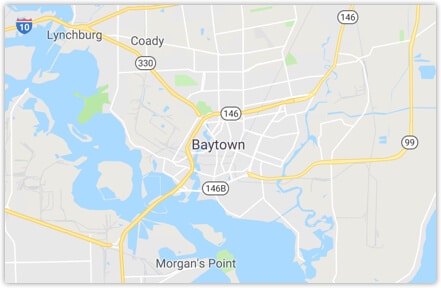
Baytown’s roadway network experiences substantial collision activity according to Texas Office of Traffic Safety data. Harris County operates under a two-year statute of limitations for personal injury actions, requiring suit within two years after the cause of action accrues. The city’s position along I-10 and Highway 146 creates concentrated traffic exposure. Major corridors including the Fred Hartman Bridge and Highway 99 generate elevated crash frequencies.

Other Texas car accident statistics are listed below.

Traffic collisions produce injuries ranging from soft tissue damage to catastrophic trauma. Whiplash, bone fractures, lacerations, and traumatic brain injuries appear frequently in emergency room records. Severe crashes cause spinal cord damage, internal organ rupture, and crush injuries requiring multiple surgeries. Fatal collisions typically result from head trauma, massive internal bleeding, or multi-system organ failure.

How Many Car Accidents Occur in Baytown Per Day?

Car accidents occur in Baytown at a rate of approximately three to four crashes daily based on Harris County collision data. The Texas Department of Transportation reports that Harris County experiences over 50,000 traffic crashes annually, with Baytown representing a proportional share of these incidents. Daily crash rates fluctuate based on weather conditions, traffic volume, and time of day, with rush hour periods seeing elevated collision frequency.

How Can a Baytown Car Accident Lawyer Help You Avoid Future Accidents and Legal Pitfalls?

Attorneys help clients avoid future legal pitfalls by ensuring compliance with Texas’s two-year statute of limitations for personal injury claims, preventing the loss of compensation rights through missed deadlines. Lawyers identify common driver behaviors that contributed to your collision, such as distracted driving or failure to maintain proper following distance, and recommend defensive driving courses or vehicle safety technology upgrades that reduce future crash risk. Legal professionals explain how Texas’s modified comparative fault system bars recovery if you bear more than 50 percent responsibility, encouraging safer driving habits that protect both your physical safety and legal rights. Attorneys review insurance policy terms to identify coverage gaps that leave you financially exposed after accidents, recommending appropriate liability limits and uninsured motorist protection. Your legal team also advises on proper accident documentation procedures, teaching you to photograph crash scenes, collect witness information, and preserve evidence immediately after collisions occur. This preparation ensures you protect your legal interests if future accidents happen despite your best prevention efforts.

What Should I Do After a Car Accident?

Taking immediate action after a collision protects your health, preserves evidence, and strengthens any future legal claim.

  • 1. Check for Injuries and Call 911 (Immediately):

    1. Check for Injuries and Call 911 (Immediately):

    Contact emergency services to report the accident and request medical assistance if anyone appears injured or complains of pain.

  • 2. Move to Safety (Within 1-2 Minutes):

    2. Move to Safety (Within 1-2 Minutes):

    Move your vehicle to the shoulder or nearby parking area if it's safe and drivable to prevent additional collisions.

  • 3. Document the Scene (Within 5-10 Minutes):

    3. Document the Scene (Within 5-10 Minutes):

    Photograph vehicle damage from multiple angles, road conditions, traffic signals, skid marks, and visible injuries before vehicles are moved.

  • 4. Exchange Information (Within 10 Minutes):

    4. Exchange Information (Within 10 Minutes):

    Collect names, phone numbers, insurance policy details, license plate numbers, and driver's license information from all involved drivers.

  • 5. Identify Witnesses (Within 15 Minutes):

    5. Identify Witnesses (Within 15 Minutes):

    Obtain contact information from bystanders who observed the collision, as their statements may prove liability later.

  • 6. Avoid Admitting Fault (Throughout):

    6. Avoid Admitting Fault (Throughout):

    Provide factual information to police without speculating about cause or accepting blame, as initial impressions often prove incorrect.

  • 7. Seek Medical Evaluation (Within 24 Hours):

    7. Seek Medical Evaluation (Within 24 Hours):

    Visit a doctor even if you feel fine, as adrenaline masks injuries like whiplash, concussions, and internal trauma that appear hours or days later.

  • 8. Report to Your Insurer (Within 72 Hours):

    8. Report to Your Insurer (Within 72 Hours):

    Notify your insurance company about the accident as required by your policy, but limit details until you understand your injuries' full extent.

  • 9. Preserve All Evidence (Ongoing):

    9. Preserve All Evidence (Ongoing):

    Save damaged clothing, keep medical bills and repair estimates, and maintain a journal documenting pain levels and activity limitations throughout recovery.

Types of Car Accidents in Baytown

Types of car accidents in Baytown are listed below.

1. Single Vehicle Accidents

1. Single Vehicle Accidents

Settlement Range: $5,000–$150,000 depending on injury severity, vehicle damage, and proof of third-party fault.

Case Duration: 6–24 months

A single-vehicle accident is a crash where only one vehicle is involved, due to driver error, weather conditions, mechanical failure, or poor road design. Single-vehicle crashes made up nearly 35% of all traffic fatalities in recent years, with over 1,200 deaths linked to roadway departure or fixed-object impacts. Texas Transportation Code §550.021 requires drivers to stop and remain at the scene when injury, death, or damage occurs. §545.401 and §545.060 are frequently applied when a driver veers out of lane or loses control. Required documents include the official crash report, injury diagnosis records, repair estimates, maintenance logs, photographs of the scene, and any third-party communications. A skilled what to do after single vehicle accident lawyer establishes liability by investigating road conditions, mechanical failures, and third-party negligence that contributed to the crash.

Common Causes

  • Speeding on curves or wet roads
  • Driver distraction or inattention
  • Fatigue
  • Mechanical failure
  • Hazardous roadway design or conditions

Win Chances: At Sutliff & Stout we have a 99% success rate on all the cases that we take.

2. Rear-End Collisions

2. Rear-End Collisions

Settlement Range: $10,000–$250,000 depending on impact speed, injury type, and duration of treatment.

Case Duration: 6–24 months

A rear-end collision is a crash where a following vehicle strikes the back of a lead car, due to unsafe speed, distracted driving, or failure to maintain distance. Rear-end collisions account for nearly 30% of all roadway crashes in Texas, with over 82,000 incidents reported in a recent year and more than 5,000 classified as severe injury cases. Texas Transportation Code §545.062 requires drivers to maintain an assured clear distance to avoid hitting the vehicle ahead. Comparative negligence may shift partial responsibility if the lead driver brakes suddenly or has non-functioning brake lights. Required documents include the CR-3 crash report, photographs of vehicle positions and damage, medical records linking injury onset to the crash, dashcam or surveillance footage, and expert assessments of crash dynamics. Working with a rear-end collision lawyer helps clarify legal standing and preserve the strongest possible claim.

Common Causes

  • Following too closely
  • Distracted driving (texting, eating)
  • Speeding in traffic congestion
  • Brake failure or delayed reaction
  • Sudden stops by the lead vehicle

Win Chances: At Sutliff & Stout we have a 99% success rate on all the cases that we take.

3. Head-On Crashes

3. Head-On Crashes

Settlement Range: $100,000–$1,000,000 depending on severity of injury, liability evidence, and long-term impairment.

Case Duration: 12–24 months

A head-on crash is a severe frontal-impact collision where two vehicles traveling in opposite directions collide directly, typically caused by wrong-way driving, unsafe passing, or intoxication. These collisions are among the most fatal in Texas, contributing to nearly 10% of statewide traffic deaths. Common injuries include traumatic brain injury, spinal cord damage, skull fractures, internal bleeding, and multiple fractures. Violations often involve Texas Transportation Code §545.058, §545.105, and §49.04 of the Texas Penal Code in alcohol-related cases. Engaging a head-on car accident lawyer strengthens case development when handling catastrophic injuries, expert evaluations, and third-party liability assertions.

Common Causes

  • Wrong-way driving
  • Crossing into oncoming traffic
  • Unsafe passing on two-lane roads
  • Impaired driving (alcohol or drugs)
  • Fatigue or falling asleep at the wheel

Win Chances: At Sutliff & Stout we have a 99% success rate on all the cases that we take.

4. Rideshare and Taxi Accidents

4. Rideshare and Taxi Accidents

Settlement Range: $15,000–$250,000 depending on injury severity, ride status, and available insurance coverage.

Case Duration: 6–18 months

A rideshare and taxi accident involves a crash where an Uber, Lyft, or traditional taxi is involved as a transporting party or while waiting for a fare. Rideshare-related crashes have increased alongside usage, with data linking app-based services to a 2–3% rise in traffic fatalities nationwide. These cases introduce layered insurance issues due to coverage shifts between app-off, app-on without passenger, and app-on with passenger phases. Texas Transportation Code §1954.051 mandates a minimum of $1 million in third-party liability coverage when a rideshare driver is actively transporting a rider. Securing representation from a rideshare accident lawyer improves handling of multi-layered insurance policies, contractor liability, and claim structuring.

Common Causes

  • Driver distraction from app use
  • Failure to yield at pickup or drop-off
  • Improper lane changes or sudden stops
  • Speeding between fares
  • Inexperienced or fatigued operators

Win Chances: At Sutliff & Stout we have a 99% success rate on all the cases that we take.

5. Bus Related Car Accidents

5. Bus Related Car Accidents

Settlement Range: $25,000–$500,000 depending on passenger injuries, collision severity, and public or private bus operator liability.

Case Duration: 9–24 months

A bus-related car accident involves a collision between a bus (public transit, school, or charter) and passenger vehicles. Over 60,000 bus-involved crashes occur annually in the U.S., with hundreds reported each year in Texas. These cases involve complex liability issues when public agencies are involved under sovereign immunity protections. Claims involving public buses fall under the Texas Tort Claims Act, which sets strict deadlines for notice and limits financial recovery. Working with a bus accident attorney helps distinguish public versus private liability and strengthens the claim’s foundation.

Common Causes

  • Driver fatigue or inattention
  • Failure to yield or stop
  • Inadequate vehicle maintenance
  • Improper bus lane merges
  • Unsafe school zone operations

Win Chances: At Sutliff & Stout we have a 99% success rate on all the cases that we take.

6. Motorcycle Accidents

6. Motorcycle Accidents

Settlement Range: $30,000–$1,000,000 depending on injury severity, long-term impairment, and insurance coverage limits.

Case Duration: 9–24 months

A motorcycle accident involves a collision between a motorcycle and another vehicle, object, or hazardous roadway condition. Over 8,000 motorcyclists are injured each year, with more than 500 fatalities reported annually according to TxDOT crash data. Riders under 21 are required to wear helmets, while riders over 21 may ride without one if they complete a safety course or carry additional insurance under Texas Transportation Code §661.003. Fault determinations rely on Texas comparative negligence rules, where partial fault reduces compensation. Working with a motorcycle accident attorney ensures proper handling of liability disputes, documentation of long-term medical needs, and coordination with insurance carriers.

Common Causes

  • Left-turn violations by other drivers
  • Speeding or failure to see a motorcyclist
  • Unsafe lane changes
  • Poor lighting or road visibility
  • Debris or pavement defects

Win Chances: At Sutliff & Stout we have a 99% success rate on all the cases that we take.

7. Semi-Truck Collisions

7. Semi-Truck Collisions

Settlement Range: $75,000–$1,500,000 depending on injury severity, vehicle damage, and violations of federal trucking regulations.

Case Duration: 12–30 months

A semi-truck collision involves a crash between a passenger vehicle and a large commercial truck weighing over 10,000 pounds. More than 38,000 commercial vehicle crashes occur each year, with a portion resulting in fatalities or disabling injuries. Common causes include driver fatigue, jackknifing, brake failure, and violations of federal hours-of-service rules regulated by the FMCSA. Texas Transportation Code §644 enforces compliance with FMCSA standards and mandates operating protocols for commercial carriers. Key documents include the CR-3 crash report, black box data, driver qualification files, cargo manifests, maintenance logs, and expert analysis of collision dynamics. Retaining a semi-truck accident attorney ensures preservation of federal evidence and strong representation against commercial insurers.

Common Causes

  • Driver fatigue or logbook violations
  • Brake or tire failure
  • Improper cargo loading
  • Failure to yield or blind-spot turns
  • Speeding or tailgating in traffic

Win Chances: At Sutliff & Stout we have a 99% success rate on all the cases that we take.

8. Drunk Driving Accidents

8. Drunk Driving Accidents

Settlement Range: $50,000–$1,000,000 depending on injury severity, BAC level, and availability of punitive damages.

Case Duration: 9–24 months

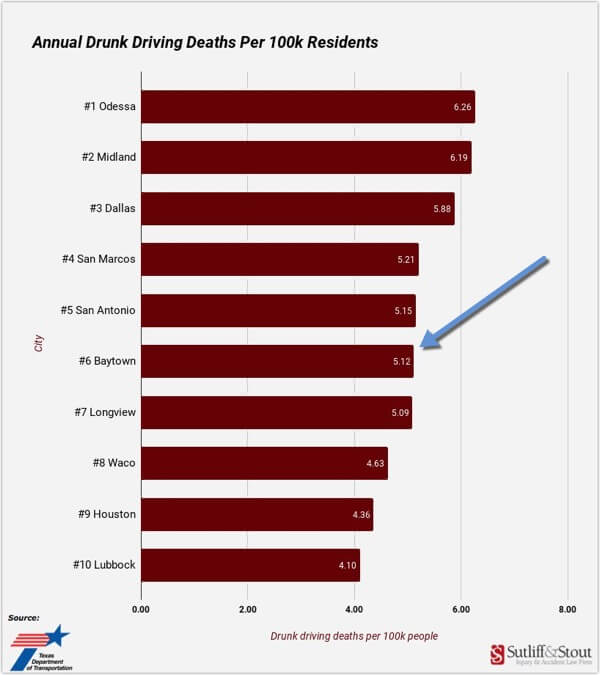
A drunk driving accident involves a collision caused by a driver operating under the influence of alcohol or drugs, defined in Texas as a blood alcohol concentration of 0.08% or higher. Alcohol-related crashes result in over 1,000 deaths annually statewide according to the Texas Department of Transportation. These cases involve criminal charges under Texas Penal Code §49.04 and civil liability including claims for punitive damages due to gross negligence. Required documents include the crash report, toxicology results, arrest records, medical files, witness statements, dashcam footage, and traffic camera data. Legal recovery is strengthened when represented by a drunk driving accident attorney who understands the intersection of criminal charges and civil injury claims.

Common Causes

  • Driving with a high BAC after bars or events
  • Failure to maintain lane or run red lights
  • Delayed reaction or judgment impairment
  • Wrong-way driving or excessive speeding
  • Combining alcohol with prescription drugs

Win Chances: At Sutliff & Stout we have a 99% success rate on all the cases that we take.

9. Fatal Car Crashes

9. Fatal Car Crashes

Settlement Range: $150,000–$2,000,000 depending on wrongful death damages, liability evidence, and economic loss to the surviving family.

Case Duration: 12–36 months

A fatal car crash involves a collision that results in the death of at least one person due to high-speed impact, impaired driving, reckless behavior, or catastrophic mechanical failure. More than 4,000 people are killed annually in Texas traffic collisions. Wrongful death claims are governed by Texas Civil Practice and Remedies Code §71.002, allowing spouses, children, and parents to pursue damages for mental anguish, loss of companionship, lost earning capacity, and funeral costs. Critical documents include the CR-3 crash report, death certificate, autopsy results, medical records, scene photographs, expert crash reconstruction, and witness affidavits. Working with a fatal car accident attorney helps families meet strict legal timelines and pursue fair compensation under Texas wrongful death statutes.

Common Causes

  • Wrong-way or head-on collisions
  • Drunk or drug-impaired driving
  • Rollovers due to overcorrection
  • Mechanical failure or tire blowouts
  • Speeding on rural or curved roads

Win Chances: At Sutliff & Stout we have a 99% success rate on all the cases that we take.

10. Side-Impact Collisions

10. Side-Impact Collisions

Settlement Range: $40,000–$500,000 depending on impact force, vehicle intrusion, and extent of injuries.

Case Duration: 9–24 months

A side impact collision or T-bone crash occurs when the front of one vehicle strikes the side of another, most commonly at intersections where one driver fails to yield or runs a red light. Side-impact collisions contribute to over 20% of serious traffic injuries according to TxDOT crash data. Victims frequently suffer pelvic fractures, rib injuries, traumatic brain injuries, and internal organ damage from direct intrusion or rotational forces. Texas Transportation Code §544.007 governs obedience to traffic signals and forms the basis of liability in side impact claims. Seeking guidance from a side-impact collision attorney ensures evidence preservation and accurate legal positioning in cases involving signal disputes or disputed right-of-way.

Common Causes

  • Failure to yield at protected left-turn intersections
  • Running red lights or stop signs
  • Misjudging the oncoming traffic gap
  • Distracted or impaired driving
  • Speeding through urban junctions

Win Chances: At Sutliff & Stout we have a 99% success rate on all the cases that we take.

11. Sideswipe Accidents

11. Sideswipe Accidents

Settlement Range: $20,000–$250,000 depending on speed, lane position, and extent of vehicle and bodily damage.

Case Duration: 6–18 months

A sideswipe accident occurs when the side of one vehicle strikes the side of another while changing lanes or merging into traffic. These crashes are common on highways and multi-lane roads, where improper lane changes, blind spot violations, or failure to signal are leading causes. Injuries include shoulder dislocations, neck strain, soft tissue damage, and wrist fractures when force pushes a vehicle into another lane or off the roadway. Texas Transportation Code §545.060 requires drivers to remain within a single lane and only move when it is safe. Consulting a sideswipe accident attorney helps prove unsafe lane changes and clarify fault in cases where physical evidence alone is limited.

Common Causes

  • Failure to check blind spots before merging
  • Drifting between lanes due to fatigue
  • Abrupt lane changes without signaling
  • Distracted driving in congested traffic
  • Rushed maneuvers in merging zones

Win Chances: At Sutliff & Stout we have a 99% success rate on all the cases that we take.

12. Multi-Vehicle Accidents

12. Multi-Vehicle Accidents

Settlement Range: $20,000–$500,000 depending on number of parties, injury severity, and shared liability determinations.

Case Duration: 12–30 months

A multi-vehicle accident involves three or more vehicles and creates complex liability scenarios where multiple drivers share responsibility for the crash. An experienced multi-vehicle accidents attorney reconstructs the sequence of impacts to determine which driver initiated the chain reaction. Defendants who are more than 50 percent responsible become jointly and severally liable, and defendants who pay more than their percentage have contribution rights against other liable parties. Required documents include police reports, traffic camera footage, witness accounts from multiple perspectives, medical records, vehicle damage patterns, and cellular phone records.

Common Causes

  • Chain reaction rear-end collisions
  • Poor visibility in weather conditions
  • Aggressive driving between multiple vehicles
  • Sudden stops in highway traffic

Win Chances: At Sutliff & Stout we have a 99% success rate on all the cases that we take.

13. Hit-and-Run Cases

13. Hit-and-Run Cases

Settlement Range: $10,000–$300,000 depending on injury severity, identification of the fleeing driver, and available uninsured motorist coverage.

Case Duration: 9–24 months

A hit and run crash occurs when a driver flees the accident scene without providing identification or rendering aid to injured parties. A skilled hit-and-run accidents lawyer works with law enforcement to identify the fleeing driver through surveillance footage, vehicle debris, and witness descriptions while simultaneously pursuing uninsured motorist claims. Texas requires personal injury claims to be filed within two years after the cause of action accrues, making prompt investigation essential. Key evidence includes security camera footage, witness descriptions, paint chips and vehicle parts left at the scene, police reports, and uninsured motorist policy documentation.

Common Causes

  • Driver has no valid insurance
  • Outstanding warrants or suspended license
  • Intoxication or drug impairment
  • Fear of legal consequences

Win Chances: At Sutliff & Stout we have a 99% success rate on all the cases that we take.

14. Parking Lot Accidents

14. Parking Lot Accidents

Settlement Range: $5,000–$150,000 depending on injury severity, fault clarity, and available surveillance evidence.

Case Duration: 6–18 months

A parking lot collision happens in commercial areas, shopping centers, and residential complexes where vehicles navigate tight spaces at low speeds with limited visibility. An experienced parking lot accidents attorney proves negligence through surveillance footage and establishes that one driver failed to yield right-of-way or back safely. Texas reckless driving statutes apply beyond public roadways to private access ways and parking areas, creating liability when drivers show willful disregard for safety. Key evidence includes security footage, witness statements, vehicle damage photographs, police incident reports, and parking lot layout diagrams.

Common Causes

  • Backing without checking surroundings
  • Speeding through parking aisles
  • Distracted driving while searching for spaces
  • Failure to yield at intersections

Win Chances: At Sutliff & Stout we have a 99% success rate on all the cases that we take.

15. Distracted Driving Accidents

15. Distracted Driving Accidents

Settlement Range: $15,000–$350,000 depending on injury severity, distraction type, and available digital evidence.

Case Duration: 6–24 months

A distracted driving crash results when a driver diverts attention from the road to phones, navigation systems, passengers, or other activities that compromise safe operation. A skilled distracted driving accidents attorney obtains cellular phone records showing texting or calls at the crash time, proving the at-fault driver’s negligence. Texas reckless driving statutes apply when distraction rises to willful or wanton disregard for safety. Key evidence includes cell phone records with timestamps, traffic camera footage, witness testimony, police reports citing distraction, and vehicle event data recorders.

Common Causes

  • Mobile phone use while driving
  • Adjusting navigation or audio systems
  • Eating or drinking behind the wheel
  • Passenger interaction diverting attention
  • Inattention at controlled intersections

Win Chances: At Sutliff & Stout we have a 99% success rate on all the cases that we take.

16. Drowsy Driving Crashes

16. Drowsy Driving Crashes

Settlement Range: $20,000–$400,000 depending on injury severity, driver fatigue documentation, and available employer or logbook evidence.

Case Duration: 9–24 months

A drowsy driving crash occurs when a driver falls asleep at the wheel or experiences severe fatigue that impairs reaction times and judgment. A skilled drowsy driving accident attorney establishes liability through driver logs, work schedules, phone records showing late-night activity, and testimony from passengers who observed the at-fault driver’s condition. Texas law classifies reckless driving as an offense when a person operates a vehicle in willful or wanton disregard for the safety of persons or property, and drowsy driving often meets this threshold when drivers ignore obvious signs of fatigue.

Common Causes

  • Extended work shifts without rest
  • Sleep disorders like apnea
  • Medication causing drowsiness
  • Long-distance driving without breaks
  • Late-night or early morning travel

Win Chances: At Sutliff & Stout we have a 99% success rate on all the cases that we take.

17. Speeding Accidents

17. Speeding Accidents

Settlement Range: $15,000–$500,000 depending on impact speed, injury severity, and available data recorder evidence.

Case Duration: 6–24 months

A speeding accident happens when a driver exceeds posted limits or drives too fast for road conditions, reducing the ability to stop or maneuver safely. An experienced speeding accident attorney proves negligence through traffic camera footage, vehicle event data recorders, skid mark analysis, witness statements, police citations, and accident reconstruction reports. Texas establishes a two-year statute of limitations for personal injury actions, requiring suit to be filed no later than two years after the cause of action accrues.

Common Causes

  • Running late to appointments
  • Aggressive driving behavior
  • Unfamiliarity with posted speed limits
  • Racing other vehicles on roadways
  • Impaired judgment from substances

Win Chances: At Sutliff & Stout we have a 99% success rate on all the cases that we take.

18. Intersection Collisions

18. Intersection Collisions

Settlement Range: $40,000–$500,000 depending on impact force, right-of-way violations, and injury extent.

Case Duration: 9–24 months

An intersection car accident occurs at crossroads where drivers fail to yield, run red lights, or misjudge gaps in traffic flow. A skilled intersection collision attorney builds cases using traffic signal timing records, intersection camera footage, police reports documenting right-of-way violations, witness accounts, and vehicle damage patterns revealing impact angles. Texas Transportation Code §544.007 governs obedience to traffic signals and forms the legal basis for fault in these claims.

Common Causes

  • Red light and stop sign violations
  • Failure to yield right-of-way
  • Left turns across oncoming traffic
  • Distracted driving through intersections
  • Misjudging speed of approaching vehicles

Win Chances: At Sutliff & Stout we have a 99% success rate on all the cases that we take.

19. Highway and Freeway Accidents

19. Highway and Freeway Accidents

Settlement Range: $25,000–$750,000 depending on collision speed, injury severity, and multi-party liability.

Case Duration: 9–30 months

A highway or freeway accident involves high-speed collisions on major thoroughfares where vehicles travel at 60–75 mph, creating severe impact forces that cause catastrophic injuries. An experienced highway accident lawyer establishes fault through Texas Department of Transportation incident reports, dashcam recordings, cellular tower data, highway surveillance footage, vehicle computer data, and expert testimony. Texas uses a modified comparative fault system where a claimant may not recover damages if their percentage of responsibility exceeds 50 percent.

Common Causes

  • Lane changes without checking blind spots
  • Following too closely at speed
  • Tire blowouts causing loss of control
  • Debris in travel lanes
  • Merging errors at entrance ramps

Win Chances: At Sutliff & Stout we have a 99% success rate on all the cases that we take.

20. Vehicle Rollover Accidents

20. Vehicle Rollover Accidents

Settlement Range: $30,000–$1,000,000 depending on injury severity, vehicle design factors, and fault determination.

Case Duration: 9–30 months

A rollover car accident involves a vehicle flipping onto its side or roof due to high-speed maneuvers, tire failures, or collisions that destabilize the vehicle’s center of gravity. A skilled rollover accident attorney proves liability through vehicle maintenance records, tire inspection reports, accident scene photographs, vehicle design defect evidence, police crash reconstructions, and expert analysis of road surface conditions. SUVs and top-heavy vehicles account for a disproportionate share of rollover crashes according to National Highway Traffic Safety Administration data.

Common Causes

  • High-speed overcorrection or evasive maneuvers
  • Tire blowouts at highway speeds
  • Tripped rollovers from curbs or guardrails
  • Top-heavy vehicle instability
  • Aggressive driving or lane departure

Win Chances: At Sutliff & Stout we have a 99% success rate on all the cases that we take.

What Are the Laws Related to Baytown Car Accidents?

Laws related to Baytown car accident cases encompass Texas Transportation Code provisions, Penal Code regulations, and Civil Practice and Remedies Code requirements governing driver behavior, liability determination, and damage recovery. These statutes establish the legal framework for pursuing compensation after crashes in Harris County.

Understanding these laws helps accident victims protect their rights when pursuing compensation for injuries and property damage. Texas’s statutory framework balances accountability with proportionate responsibility principles.

How Do Car Accident Settlements Work in Baytown ?

Car accident settlements function through negotiated agreements between injured parties and insurance companies, with Texas’s modified comparative fault system reducing recovery if you bear more than 50 percent responsibility. Your attorney calculates total damages including medical expenses, lost wages, property damage, and pain and suffering to establish a settlement demand. Insurance adjusters review the claim and typically offer a lower initial amount. Negotiations proceed through multiple rounds of counteroffers until parties reach an acceptable figure. Most settlements finalize before the two-year statute of limitations expires under Texas Civil Practice and Remedies Code Section 16.003. Settlement agreements become binding once signed, requiring you to release all future claims against the at-fault driver. The process typically takes three to six months for straightforward cases but extends longer when injuries require ongoing treatment or liability remains disputed.

Is Texas a No-Fault State for Car Accidents?

Texas operates under a fault-based system rather than no-fault insurance, requiring injured parties to prove the other driver’s negligence caused their damages. You file claims directly against the at-fault driver’s liability insurance instead of your own policy regardless of who caused the collision. The modified comparative fault system allows recovery if you’re 50 percent or less responsible, with your compensation reduced by your percentage of fault assigned by the trier of fact, and liable defendants pay only their proportionate share of damages. This fault-based approach differs from no-fault states where each driver’s insurance covers their own injuries. Texas drivers maintain greater freedom to pursue full compensation through lawsuits when serious injuries occur.

What Are My Rights If I Was in a Car Accident?

Your rights after a car accident protect your ability to recover physically and financially from injuries caused by another driver’s negligence.

  • 1. Right to Medical Treatment:

    1. Right to Medical Treatment:

    You control your healthcare decisions and can seek treatment from any qualified physician without insurance company approval or interference.

  • 2. Right to Fair Compensation:

    2. Right to Fair Compensation:

    Texas law establishes your right to damages when another person's wrongful act, neglect, carelessness, or unskillfulness causes your injuries.

  • 3. Right to Legal Representation

    3. Right to Legal Representation

    : You can hire an attorney at any stage of your claim without penalty, and insurance companies cannot retaliate against you for seeking counsel.

  • 4. Right to Refuse Recorded Statements:

    4. Right to Refuse Recorded Statements:

    No law requires you to provide recorded statements to the at-fault driver's insurance company before consulting an attorney.

  • 5. Right to Review Settlement Offers:

    5. Right to Review Settlement Offers:

    You maintain complete control over accepting or rejecting settlement proposals, and no one can force you to settle against your wishes.

  • 6. Right to File a Lawsuit:

    6. Right to File a Lawsuit:

    You can pursue litigation within two years after the accident date if settlement negotiations fail to produce fair compensation.

  • 7. Right to Reject Lowball Offers:

    7. Right to Reject Lowball Offers:

    Insurance companies frequently present inadequate initial settlements, and you can counter with documented evidence supporting higher damages.

How to Understand Whether You Need a Car Accident Attorney

Determining whether you need a car accident attorney depends on evaluating injury severity, liability disputes, and insurance company behavior.

  • 1. Assess Injury Severity:

    1. Assess Injury Severity:

    Hire an attorney if injuries require hospitalization, surgery, or ongoing treatment exceeding basic urgent care visits.

  • 2. Calculate Economic Damages:

    2. Calculate Economic Damages:

    Retain legal counsel when medical bills exceed $10,000 or lost wages create financial hardship affecting your household budget.

  • 3. Evaluate Liability Disputes:

    3. Evaluate Liability Disputes:

    Seek representation if the insurance company claims you share fault, since Texas bars recovery when you're more than 50 percent responsible.

  • 4. Monitor Insurance Company Tactics:

    4. Monitor Insurance Company Tactics:

    Contact an attorney if adjusters pressure you for quick settlements, delay claim processing beyond 30 days, or deny valid claims without explanation.

  • 5. Consider Long-term Impacts:

    5. Consider Long-term Impacts:

    Consult legal professionals when injuries cause permanent disabilities, disfigurement, or chronic pain affecting your earning capacity or quality of life.

  • 6. Review Policy Limits:

    6. Review Policy Limits:

    Obtain representation when the at-fault driver carries minimum liability coverage ($30,000 per person in Texas) insufficient to cover your damages.

  • 7. Identify Multiple Parties:

    7. Identify Multiple Parties:

    Hire counsel when commercial vehicles, rideshare drivers, or multiple defendants complicate the claims process requiring investigation of corporate policies and additional insurance coverage.

Common Causes of Car Accidents in Baytown

Common causes of car accidents in Baytown are listed below.

1. Distracted Driving

1. Distracted Driving

Distracted driving occurs when operators divert attention from the roadway to phones, navigation systems, passengers, or other stimuli, creating dangerous gaps in awareness that lead to rear-end collisions, intersection crashes, and pedestrian strikes. Baytown’s congested corridors along Interstate 10 and State Highway 146 see frequent distracted driving incidents, particularly during morning and evening commutes when drivers juggle work calls, texts, and navigation apps while maneuvering through heavy traffic. Reckless driving involves operating a vehicle in willful or wanton disregard for the safety of persons or property, and distracted driving often meets this threshold when operators knowingly engage with devices despite understanding the risks. Baytown car accident lawyers establish liability by demonstrating the at-fault driver breached their duty of care through documented phone usage, witness testimony, or admission of distraction at the crash scene. Evidence that can strengthen your case includes cellphone records showing active use at crash time, dash camera footage capturing driver behavior, witness statements describing erratic vehicle operation, traffic camera recordings of the collision, accident reconstruction analysis and police reports noting distracted driving citations.

2. Driving Under the Influence

2. Driving Under the Influence

Driving under the influence impairs judgment, slows reaction time, and diminishes motor control, transforming routine driving tasks into life-threatening hazards that cause devastating crashes across Baytown roadways. The city’s entertainment districts near Garth Road and Baytown’s proximity to Houston create elevated DUI risks, particularly during weekend nights when impaired drivers travel between bars, restaurants, and residential areas through densely populated corridors. A person commits an offense if intoxicated while operating a motor vehicle in a public place, with intoxication defined as BAC of 0.08 or more. Or not having normal use of mental or physical faculties due to alcohol, controlled substance, drug, or other substance, establishing clear legal standards for impairment. Baytown car accident lawyers establish liability by demonstrating the at-fault driver breached their duty of care through chemical test results, field sobriety test failures, or observable signs of intoxication documented by law enforcement. Evidence that can strengthen your case includes blood alcohol test results, police reports documenting DUI arrest, toxicology reports showing drug presence, dash camera footage of erratic driving, bar receipts or witness testimony about alcohol consumption, and field sobriety test documentation.

3. Ignoring Traffic Signals and Signs

3. Ignoring Traffic Signals and Signs

Ignoring traffic signals and signs creates intersection chaos, stripping other drivers and pedestrians of their ability to predict traffic flow and avoid collisions that result in severe injuries and fatalities. Baytown’s major intersections along Garth Road, Crosby Cedar Bayou Road, and Sjolander Road experience frequent signal violations, particularly during rush hours when impatient drivers run red lights or disregard stop signs to save seconds while endangering everyone sharing the roadway. Traffic control devices establish legal duties that drivers violate at their peril, creating clear liability when crashes result from deliberate disregard of signals that protect intersection users. Baytown car accident lawyers establish liability by demonstrating the at-fault driver breached their duty of care through red light camera evidence, witness testimony, or physical evidence showing the violating vehicle’s position and speed at impact. Evidence that can strengthen your case includes red light camera photographs, intersection surveillance footage, witness statements from other drivers or pedestrians, traffic signal timing records, accident scene photos showing vehicle positions, and police citations for signal violations.

4. Unsafe Lane Changes

4. Unsafe Lane Changes

Unsafe lane changes occur when drivers merge without checking blind spots, fail to signal intentions, or cut across multiple lanes simultaneously, creating sudden hazards that leave adjacent vehicles no time to react or avoid impact. Baytown’s Interstate 10 corridor and the Fred Hartman Bridge approach lanes see frequent unsafe lane change crashes, particularly where multiple lanes converge and drivers jockey for position while traveling at highway speeds through construction zones and merge points. An operator on a roadway of sufficient width shall drive on the right half of the roadway and may not drive on the left half in overtaking and passing another vehicle unless the left half is clearly visible and free of oncoming traffic, establishing basic lane discipline requirements. Baytown car accident lawyers establish liability by demonstrating the at-fault driver breached their duty of care through failure to signal, improper mirror checks, or aggressive multi-lane maneuvers documented by witnesses or video evidence. Evidence that can strengthen your case includes dash camera footage showing the lane change sequence, witness testimony from adjacent drivers, accident scene photos depicting vehicle damage patterns, police reports citing improper lane change, traffic camera recordings and expert reconstruction analysis of vehicle trajectories.

5. Reckless Driving

5. Reckless Driving

Reckless driving involves operating a vehicle in willful or wanton disregard for the safety of persons or property, encompassing aggressive behaviors like excessive speeding, weaving through traffic, racing, and intentionally dangerous maneuvers that endanger everyone on the road. Baytown drivers encounter reckless operators on Interstate 10, State Highway 146, and throughout residential neighborhoods where aggressive drivers treat public roads like personal racetracks, ignoring basic safety principles while pursuing thrills or venting frustration through dangerous driving. Reckless driving is classified as a misdemeanor punishable by fine up to $200 and jail time not exceeding 30 days, though civil liability for resulting crashes far exceeds these criminal penalties. Baytown car accident lawyers establish liability by demonstrating the at-fault driver breached their duty of care through documented excessive speed, multiple traffic violations, or witness testimony describing particularly dangerous driving conduct. Evidence that can strengthen your case includes police reports citing reckless driving charges, witness statements describing aggressive maneuvers, speed calculations from accident reconstruction, video footage of dangerous driving, prior traffic violations showing a pattern of recklessness and physical evidence of excessive speed at impact.

6. Speeding

6. Speeding

Speeding reduces available reaction time, extends stopping distances, and magnifies crash forces, transforming otherwise survivable collisions into catastrophic events that cause severe injuries and deaths across Baytown’s road network. The city’s mix of residential streets, commercial corridors like Garth Road, and high-speed routes including Interstate 10 creates varied speed zones that some drivers ignore, maintaining excessive speeds through school zones, construction areas and neighborhoods where children play and pedestrians cross. Studies show speed contributes to crashes differently across environments, with residential speeding creating pedestrian risks while highway speeding causes multi-vehicle pileups. Baytown car accident lawyers establish liability by demonstrating the at-fault driver breached their duty of care through documented speeds exceeding posted limits or speeds unsafe for prevailing conditions like rain, fog, or heavy traffic. Evidence that can strengthen your case includes accident reconstruction speed calculations, witness estimates of vehicle velocity, skid mark measurements, vehicle damage severity analysis, posted speed limit signs, and weather condition reports showing unsafe speeds for conditions.

7. Tailgating

7. Tailgating

Tailgating eliminates the safety buffer between vehicles, removing the following driver’s ability to stop safely when traffic slows and creating rear-end collision risks that spike during congested conditions and sudden slowdowns. Baytown’s Interstate 10 corridor experiences frequent tailgating-related crashes during rush hours when impatient drivers follow too closely at highway speeds, leaving no margin for error when brake lights flash ahead or traffic suddenly stops due to accidents, construction, or congestion. Following distance requirements protect all road users by ensuring adequate space to react and stop, with violations creating clear liability when rear-end crashes result from insufficient spacing. Baytown car accident lawyers establish liability by demonstrating the at-fault driver breached their duty of care through documented following distance violations, dash camera evidence, or the physical reality that rear-end collisions typically establish fault for the following driver. Evidence that can strengthen your case includes dash camera footage showing following distance, witness testimony about aggressive following, accident scene photos depicting rear-end damage patterns, police reports citing following too closely, brake system inspection results and expert testimony about safe following distances at documented speeds.

8. Wrong-way Driving

8. Wrong-way Driving

Wrong-way driving occurs when motorists travel against the flow of traffic on one-way streets, highway exit ramps, or divided roadways, creating catastrophic head-on collision risks that often result in severe injuries or fatalities. Baytown’s proximity to Interstate 10 and State Highway 146 creates particular dangers when impaired or confused drivers enter exit ramps traveling the wrong direction, threatening vehicles in the correct lanes during both rush hour congestion and late-night hours. According to Federal Highway Administration data, wrong-way crashes account for approximately 3 percent of highway fatalities annually. Texas Penal Code § 49.04 establishes that drivers operating vehicles while intoxicated (with BAC of 0.08 or more, or lacking normal use of mental or physical faculties due to alcohol or drugs) commit a criminal offense that frequently contributes to wrong-way incidents. Baytown car accident lawyers establish liability by demonstrating the at-fault driver breached their duty of care through traveling in the prohibited direction against traffic flow. Evidence that can strengthen your case includes police accident reports documenting wrong-way travel, witness statements from other motorists, traffic camera footage showing the vehicle’s direction, road signage photographs indicating proper travel direction, toxicology results if impairment is suspected and vehicle damage patterns consistent with head-on impact.

What to Know About Traffic (Auto) Accident Lawyer Services?

Baytown car accident lawyers provide investigation services, liability determination, insurance negotiations, medical documentation, settlement advocacy, and trial representation for injured victims pursuing compensation after collisions.

  • Case Investigation And Evidence Collection

    Case Investigation And Evidence Collection

    Attorneys gather crash scene photographs, witness contact information, police reports, surveillance footage, and accident reconstruction data establishing fault and proving negligence claims. Evidence preservation begins immediately to prevent loss of critical documentation showing how the collision occurred. 2.

  • Liability Determination And Fault Analysis

    Liability Determination And Fault Analysis

    Lawyers examine Texas Transportation Code violations, duty of care breaches, and negligent driving behaviors including reckless driving, improper lane usage, and unsafe passing to establish legal responsibility. Identifying all liable parties becomes essential for pursuing full compensation from every responsible defendant. 3.

  • Insurance Claim Filing And Management

    Insurance Claim Filing And Management

    Attorneys handle all communications with insurance adjusters, submit demand packages with supporting medical records and economic documentation, and prevent clients from making recorded statements that undermine claims. Claim management protects victims from tactics insurers use to minimize payouts or deny valid injury claims. 4.

  • Settlement Negotiation And Demand Letters

    Settlement Negotiation And Demand Letters

    Attorneys present evidence-backed settlement demands quantifying medical expenses, lost earnings, property damage, and pain and suffering, then counter lowball offers with additional documentation. Negotiation continues until insurers offer fair compensation reflecting the true cost of injuries and losses. 5.

  • Damages Calculation And Economic Analysis

    Damages Calculation And Economic Analysis

    Attorneys calculate past medical expenses, future medical costs based on life care plans, lost earning capacity, property damage, and non-economic losses to pursue full compensation. Economic analysis includes vocational rehabilitation assessments when permanent disabilities prevent victims from returning to previous employment. 6.

  • Statute Of Limitations Compliance

    Statute Of Limitations Compliance

    Attorneys ensure all legal filings meet Texas's two-year personal injury deadline from the accident date, protecting clients' rights to compensation by filing complaints before expiration. Missing this deadline permanently bars victims from recovering damages through the court system. 7.

  • Comparative Negligence Defense

    Comparative Negligence Defense

    Lawyers counter insurance company arguments that victims share fault by presenting witness testimony, traffic camera footage and accident reconstruction evidence, particularly important because Texas uses a modified comparative fault system with a 50% bar that prevents recovery if the claimant's responsibility exceeds 50 percent. Defense strategies protect compensation when insurers attempt to shift blame onto injured victims.

Tort Law Impact

What Role Does Tort Law Play in Auto Accident Cases in Baytown?

Tort law provides the foundation for auto accident victims to recover damages when another driver’s negligence causes harm. Texas law establishes liability when injury results from a person’s wrongful act, neglect, carelessness, unskillfulness, or default, creating the legal basis for collision claims. Victims prove four elements: the at-fault driver owed a duty of care, breached that duty through negligent actions, directly caused the accident, and produced measurable damages. Texas applies a modified comparative fault system where claimants cannot recover damages if their responsibility exceeds 50 percent, requiring attorneys to demonstrate the defendant bears primary fault. Tort principles allow recovery of economic damages (medical bills, lost wages, property damage) and non-economic damages (pain, suffering, emotional distress) based on the severity of injuries and impact on daily life.

Baytown Accident Protections

What Legal Protections Exist Under Car Accident Laws in Baytown?

Legal protections under car accident laws ensure victims receive fair treatment and access to compensation after collisions caused by negligent drivers.

  1. Right to File Civil Claims: Victims can pursue damages when injury results from another person’s wrongful act, neglect, carelessness, unskillfulness, or default, establishing accountability for at-fault drivers.
  2. Comparative Fault Protection: Claimants may recover damages provided their percentage of responsibility does not exceed 50 percent, allowing partial recovery even when victims share some fault.
  3. Two-Year Filing Deadline: Texas establishes a 2-year statute of limitations requiring victims to bring suit not later than two years after the cause of action accrues, protecting the right to pursue claims within reasonable timeframes.
  4. Protection from Joint Liability Abuse: Liable defendants pay only the percentage of damages equal to their percentage of responsibility, preventing unfair burden-shifting among multiple at-fault parties.
  5. Criminal Penalty Deterrence: Reckless driving constitutes an offense punishable by fine up to $200 and jail time not exceeding 30 days, discouraging dangerous conduct through criminal consequences.

Baytown Victims' Rights

What Legal Rights Do Car Accident Victims Have in Baytown?

Car accident victims possess several legal rights protecting their ability to seek compensation and hold negligent drivers accountable for collision-related injuries.

  1. Right to Compensation for Damages: Victims can recover economic damages (medical expenses, lost income, property damage) and non-economic damages (pain, suffering, disability) caused by the collision.
  2. Right to Proportionate Recovery: Texas law allows claimants to recover damages when their percentage of responsibility is 50 percent or less, ensuring partial fault doesn’t eliminate compensation entirely.
  3. Right to Legal Representation: Victims can hire attorneys to negotiate with insurance companies, gather evidence, and litigate claims without upfront costs through contingency fee arrangements.
  4. Right to Refuse Early Settlements: Insurance companies cannot force victims to accept inadequate settlement offers before understanding the full extent of injuries and financial losses.
  5. Right to Trial by Jury: The trier of fact determines percentage of responsibility for each person causing or contributing to harm, allowing victims to present their case before impartial jurors.
  6. Right to Punitive Damages: Exemplary damages apply when defendants commit certain felony-based conduct knowingly or intentionally, punishing egregious misconduct beyond ordinary negligence.

Baytown Traffic Laws

What Texas Traffic Laws and Regulations Apply to Car Drivers in Baytown?

Texas traffic laws establish specific duties and responsibilities for drivers to prevent collisions and maintain roadway safety throughout Baytown and Harris County.

  1. Right-Side Driving Requirement: Operators on roadways of sufficient width must drive on the right half of the roadway and may not drive on the left half when overtaking unless the left half is clearly visible and free of oncoming traffic.
  2. Reckless Driving Prohibition: Drivers commit an offense by operating vehicles in willful or wanton disregard for the safety of persons or property, preventing dangerous conduct that endangers others.
  3. DWI Intoxication Standards: Operating a motor vehicle while intoxicated constitutes an offense, with intoxication defined as BAC of 0.08 or more, or lacking normal use of mental or physical faculties.
  4. Safe Passing Distance: Operators passing other vehicles must pass to the left at a safe distance, though Texas does not mandate a specific distance by statute.
  5. Due Care Toward Pedestrians: Vehicle operators must exercise due care to avoid colliding with pedestrians on roadways, give warning by sounding horn when necessary, and exercise proper precaution on observing children or incapacitated persons.

Vicarious Liability Baytown

How Does Vicarious Liability Apply in Baytown Car Accident Lawsuits?

Vicarious liability allows injured parties to hold employers or vehicle owners responsible for accidents caused by employees or authorized drivers acting within the scope of their duties. Texas law establishes liability when injury results from a person’s or their agent’s or servant’s wrongful act, neglect, carelessness, unskillfulness, or default, extending responsibility beyond the direct driver. Employers face liability when delivery drivers, sales representatives, or other employees cause collisions while performing job-related tasks, even if the employer committed no direct negligence. This doctrine proves particularly valuable when at-fault drivers carry insufficient insurance coverage, as corporate employers typically maintain higher policy limits providing better recovery opportunities for seriously injured victims.

Owner Liability Exists

Can a Vehicle Owner Be Held Liable If Someone Else Caused the Car Accident?

Vehicle owners can face liability when they negligently entrust their cars to incompetent, reckless, or unlicensed drivers who subsequently cause collisions injuring others. Texas recognizes liability when injury results from a person’s or their agent’s wrongful act, neglect, carelessness, unskillfulness, or default, creating potential owner responsibility for driver negligence. Owners demonstrate negligent entrustment by lending vehicles to drivers with suspended licenses, known histories of reckless driving, or obvious impairment from alcohol or drugs. Rental car companies face similar exposure when failing to verify driver credentials or renting to disqualified individuals. This legal principle ensures injured victims can pursue compensation from parties who enabled dangerous drivers to access vehicles, particularly when the actual driver lacks adequate insurance coverage.

Negligence in law determination in car accident cases relies on establishing four elements: duty of care, breach of that duty, causation, and damages resulting from the breach. Drivers owe other motorists a duty to operate vehicles safely and follow traffic laws. Breach occurs when drivers violate traffic statutes, drive recklessly, or fail to exercise reasonable care under the circumstances. Violations such as reckless driving demonstrate willful or wanton disregard for safety. Causation connects the breach directly to the collision and resulting injuries. Texas applies modified comparative fault rules where claimants cannot recover damages if their responsibility exceeds 50 percent. Evidence including police reports, witness statements, traffic camera footage, and accident reconstruction analysis establishes which party violated their duty of care and caused the crash.

Attorneys follow systematic procedures to determine liability in law and build strong liability cases after collisions occur.

1. Conduct Initial Client Interview: Attorneys gather detailed accounts of the accident circumstances, driver actions, road conditions, and immediate aftermath to establish the factual foundation.

2. Obtain Official Police Report: Lawyers secure the crash report documenting officer observations, preliminary fault determinations, traffic violations cited, and witness information collected at the scene.

3. Photograph Physical Evidence: Legal teams document vehicle damage patterns, skid marks, debris fields, traffic control devices, and road defects that reveal collision dynamics.

4. Interview Eyewitnesses: Attorneys collect sworn statements from independent observers who saw the crash occur, capturing unbiased accounts before memories fade.

5. Secure Electronic Data: Lawyers subpoena cell phone records, GPS data, and vehicle event data recorders that reveal driver behavior immediately before impact.

6. Consult Accident Reconstruction Experts: Specialists analyze physical evidence, apply physics principles, and create computer simulations demonstrating how the collision occurred.

7. Review Traffic Laws: Attorneys identify specific statute violations that establish negligence per se, strengthening liability arguments through documented legal breaches.

8. Analyze Insurance Policies: Legal professionals examine coverage limits, policy exclusions, and multiple liable parties to identify all available compensation sources.

Attorneys secure video evidence through immediate identification and preservation requests to prevent footage deletion or overwriting. Legal teams canvass the accident scene within 24 to 48 hours, identifying businesses, traffic cameras, and residential security systems with potential recordings. Lawyers send formal preservation letters to property owners, businesses, and government agencies requiring them to retain footage before automatic deletion cycles erase critical evidence. Attorneys issue subpoenas when voluntary cooperation fails, compelling footage production through court orders. Dashcam footage from involved vehicles or nearby motorists provides direct collision documentation. Time sensitivity proves critical because most systems overwrite recordings within 7 to 30 days if preservation requests arrive late.

Cell phone records establish distracted driving by documenting calls, texts, and app usage during the moments immediately preceding crashes. Attorneys subpoena phone records from carriers showing exact timestamps of communications that coincide with accident occurrence times. Text message logs, social media activity, and data usage patterns prove drivers engaged in phone activities instead of watching the road. GPS data from phone applications reveals travel speed and location, corroborating or contradicting driver statements about their actions. This electronic evidence overcomes driver denials because phone records provide objective, time-stamped proof of distraction that eyewitness testimony alone cannot deliver.

Eyewitness statements provide independent, third-party accounts that corroborate collision facts and counter conflicting driver versions of events. Attorneys use witness testimony to establish traffic signal status, vehicle speeds, lane positions, and driver actions that official reports may not capture. Credible witnesses strengthen settlement negotiations by demonstrating case strength to insurance adjusters evaluating liability exposure. Witnesses who observed the entire sequence of events prove particularly valuable when drivers offer contradictory accounts of fault. Attorneys preserve witness statements through recorded interviews and sworn affidavits before memories deteriorate. Witness credibility depends on viewing angle, attention level, and absence of bias toward either party involved in the collision.

Expert witness testimony translates technical evidence into persuasive explanations that establish liability and damages in contested cases. Accident reconstruction specialists analyze physical evidence, apply engineering principles, and demonstrate how collisions occurred through scientific methodology that lay testimony cannot provide. Medical experts connect injuries directly to crash forces, explain treatment necessity, and project future care requirements that justify compensation demands. Biomechanical engineers testify about injury mechanisms, showing how specific collision forces caused particular trauma patterns. Economic experts calculate lifetime earnings losses, medical costs, and diminished earning capacity using actuarial data and vocational analysis. Expert testimony proves particularly critical when insurance companies dispute causation, injury severity, or damage calculations requiring specialized knowledge beyond juror understanding.

Lawyers reconstruct crash scenes by analyzing physical evidence, applying physics principles, and creating visual demonstrations that establish collision dynamics. Attorneys measure skid marks, document debris patterns, and photograph vehicle damage to determine impact angles, speeds, and points of contact. Specialists use computer software that inputs physical measurements and generates animated simulations showing vehicle movements before, during, and after impact. Reconstruction experts calculate speeds from skid distances, evaluate sight lines, and assess driver reaction times based on road conditions. This scientific analysis overcomes conflicting driver accounts by providing objective evidence of what physically occurred during the collision sequence.

A typical car accident lawsuit in Baytown takes 12 to 24 months from filing to resolution, though complex cases involving severe injuries or disputed liability may extend beyond two years. Settlement negotiations occupy the first 6 to 9 months as attorneys exchange evidence, evaluate damages, and negotiate with insurance companies. Cases proceed to trial preparation if settlement talks fail, adding another 6 to 12 months for discovery, depositions, and motion practice. Trial itself typically spans 3 to 7 days, with jury deliberations adding additional time before verdict. Multiple factors influence the timeline including court docket congestion in Harris County, medical treatment completion, and the number of parties involved in the collision. Straightforward rear-end collisions with clear liability often settle within 8 months, while multi-vehicle crashes on Interstate 10 requiring accident reconstruction may take 18 months or longer. Your legal team works to expedite the process while ensuring thorough case preparation that supports full compensation recovery.

Car accident lawsuits in Baytown follow specific procedural steps from initial filing through final judgment.

1. Petition Filing: Your attorney files a formal complaint in Harris County District Court outlining the collision facts, legal claims, and damages sought from the defendant.

2. Service of Process: The defendant receives official notice of the lawsuit through a process server or certified mail, triggering their deadline to respond.

3. Answer and Defenses: The defendant files a written response admitting or denying allegations and raising affirmative defenses within the statutory deadline.

4. Discovery Phase: Both parties exchange evidence through written interrogatories, document requests, and depositions of witnesses, medical providers, and accident reconstruction specialists.

5. Mediation Conference: The court typically orders mediation where a neutral third party facilitates settlement negotiations before trial.

6. Pre-Trial Motions: Attorneys file motions to exclude evidence, clarify legal issues, or seek summary judgment on specific claims.

7. Jury Selection: If settlement fails, attorneys question potential jurors to select an impartial panel for trial.

8. Trial Proceedings: Both sides present opening statements, examine witnesses, introduce evidence, and deliver closing arguments before the jury deliberates and returns a verdict.

The statute of limitations for filing a car accident lawsuit in Baytown is two years from the date of the collision under Texas Civil Practice and Remedies Code Section 16.003. This deadline applies strictly. Courts dismiss cases filed even one day late except in rare circumstances involving legal disability or fraudulent concealment. The two-year clock starts ticking on the accident date, not when you discover injuries or complete medical treatment. Wrongful death claims also carry a two-year limitation period that begins running on the date of the victim’s death. Missing this deadline permanently bars your right to pursue compensation through the courts, regardless of injury severity or liability clarity. Insurance companies often delay settlement negotiations hoping claimants miss filing deadlines. Consulting attorneys early protects your rights and ensures timely case filing if negotiations fail.

Pain and suffering compensation addresses physical discomfort and emotional distress following car accidents, with attorneys documenting injury severity and life impact to establish claim value.

1. Physical Pain and Discomfort: Compensation covers ongoing pain from injuries like fractures, soft tissue damage, and spinal injuries requiring long-term treatment. Documentation includes medical records describing pain levels, medication needs, and physical limitations affecting daily activities.

2. Mental Anguish and Emotional Distress: Psychological trauma from the collision itself, including anxiety, depression, and post-traumatic stress disorder, qualifies for compensation. Mental health treatment records and therapist evaluations support these claims.

3. Loss of Enjoyment of Life: Victims recover damages when injuries prevent participation in hobbies, sports, family activities, or social events previously enjoyed. Testimony from family members and friends demonstrates how injuries changed your lifestyle.

4. Disfigurement and Scarring: Permanent visible injuries affecting appearance warrant separate compensation, particularly when scarring impacts self-esteem or career prospects. Photographs documenting injury progression strengthen these claims.

5. Loss of Consortium: Spouses can claim compensation when injuries damage marital relationships, including loss of companionship, affection, and intimacy. These claims require separate documentation of relationship impact.

6. Permanent Disability or Impairment: Lasting physical limitations reducing quality of life justify substantial compensation, calculated based on age, injury severity, and life expectancy. Medical experts provide opinions on permanency and future impact.

Texas law allows recovery of future medical expenses when injuries from car accidents require ongoing treatment beyond initial care within the two-year limitations period. Attorneys work with medical experts who provide detailed cost projections for anticipated surgeries, physical therapy, medications, and assistive devices needed throughout your lifetime. These projections must demonstrate reasonable medical necessity based on your specific injuries and treatment history. Claims include future diagnostic procedures, specialist consultations, home health care, and medical equipment replacement costs.

Police reports serve as foundational evidence establishing collision facts, driver statements, and officer observations documented immediately after crashes occur. Officers record scene conditions including skid marks, vehicle positions, road hazards, and weather factors that help reconstruct how accidents happened. The reporting officer’s preliminary fault assessment, while not legally binding, carries significant weight during insurance negotiations and settlement discussions. Witness contact information preserved in reports allows attorneys to locate third parties who corroborate your account of events. Citations issued for traffic violations like running red lights or reckless driving provide clear evidence of negligence supporting your claim.

Attorneys calculate damages by totaling economic losses like medical bills and lost wages, then adding non-economic damages for pain and suffering based on injury severity. The multiplier method applies a factor between 1.5 and 5 to economic damages depending on injury permanence, treatment duration, and life impact. Severe injuries requiring surgery or causing permanent disability justify higher multipliers than soft tissue injuries healing within weeks. Texas’s modified comparative fault system reduces your recovery by your percentage of responsibility if you’re found less than 51% at fault. Attorneys also factor in available insurance coverage limits, defendant’s assets, and comparable verdict data from similar Harris County cases when establishing demand values.

Economic damages compensate for measurable financial losses stemming from car accidents, with documentation proving each expense directly connected to the collision.

1. Medical Expenses: Past and future costs include emergency room treatment, hospital stays, surgeries, diagnostic imaging, prescription medications, physical therapy, and medical equipment. Keep all bills, receipts, and insurance explanation of benefits statements.

2. Lost Wages: Income lost during recovery includes salary, hourly wages, overtime, bonuses, and commissions missed due to injury-related absences. Employer documentation and pay stubs verify earning history and time missed.

3. Loss of Earning Capacity: Permanent injuries reducing your ability to work at previous capacity warrant compensation for future income reduction. Vocational experts calculate lifetime earning differences between pre-injury and post-injury capabilities.

4. Property Damage: Vehicle repair costs, replacement value for totaled cars, rental car expenses, and damaged personal property inside the vehicle qualify for reimbursement. Obtain repair estimates from multiple certified shops.

5. Out-of-Pocket Costs: Transportation to medical appointments, home modifications for disabilities, household help during recovery, and medical supplies create recoverable expenses. Maintain detailed records and receipts.

6. Rehabilitation and Therapy Costs: Physical therapy, occupational therapy, speech therapy, and psychological counseling expenses address injury recovery needs. Treatment plans from healthcare providers justify these ongoing costs.

Lost wages cover income missed during recovery by multiplying your daily or hourly rate by time absent from work, verified through employer statements and tax returns. Pay stubs from the three months before your accident establish baseline earnings including overtime and bonuses regularly received. Self-employed individuals use profit and loss statements, tax returns, and client contracts to demonstrate income disruption. Loss of earning capacity addresses permanent injuries reducing future work ability, calculated by comparing pre-accident earning potential to post-injury capabilities over your remaining work life. Vocational experts analyze your education, skills, work history, and medical restrictions to project lifetime income differences, often totaling hundreds of thousands of dollars for younger workers with severe disabilities.

Non-economic damages compensate for intangible losses affecting quality of life, emotional wellbeing, and personal relationships following car accidents.

1. Pain and Suffering: Physical discomfort, chronic pain, and injury-related suffering throughout recovery and beyond warrant compensation based on injury severity and duration. Medical records documenting pain complaints and treatment responses support these claims.

2. Emotional Distress: Anxiety, depression, fear, and psychological trauma stemming from the collision and injuries justify separate damages. Mental health treatment records and therapist evaluations demonstrate emotional impact.

3. Loss of Enjoyment of Life: Inability to participate in previously enjoyed activities, hobbies, sports, or social events reduces life quality deserving compensation. Personal testimony and witness statements illustrate lifestyle changes.

4. Disfigurement and Scarring: Permanent visible injuries affecting appearance, particularly facial scarring or amputation, warrant substantial compensation. Photographs tracking injury progression document these damages.

5. Physical Impairment and Disability: Lasting limitations affecting mobility, strength, or physical capabilities reduce independence and life satisfaction. Medical opinions on permanency and functional restrictions establish these claims.

6. Loss of Consortium: Spouses claim compensation when injuries damage marital relationships, companionship, and intimacy. These claims require documentation showing relationship impact before and after the accident.

Punitive damages are available in Baytown car accident lawsuits if the at-fault driver’s conduct meets specific legal standards, with caps limiting awards to the greater of two times economic damages plus noneconomic damages not exceeding $750,000, or $200,000. These caps do not apply when the defendant committed certain felony-based conduct knowingly or intentionally. Courts award punitive damages when the defendant acted with fraud, malice, or gross negligence rather than ordinary carelessness. Drunk driving cases frequently qualify because operating a vehicle while intoxicated demonstrates conscious disregard for others’ safety. Reckless driving involving excessive speed through school zones or residential areas may also support punitive damage claims. Juries cannot be informed of the statutory cap during trial proceedings. The availability of punitive damages depends on proving the defendant’s conduct exceeded simple negligence and rose to the level of intentional or reckless misconduct causing your injuries.

Your ability to recover damages depends on your percentage of responsibility under Texas’s modified comparative fault system, which bars recovery if your fault exceeds 50 percent. The trier of fact determines each person’s percentage of responsibility, and liable defendants pay only damages equal to their assigned percentage. A driver who runs a red light but was speeding 10 mph over the limit might be assigned 20 percent fault, reducing their recovery by that amount. Insurance adjusters often inflate your fault percentage to reduce their payout obligations. Your legal team will gather evidence demonstrating the other driver’s primary responsibility, including witness statements, traffic camera footage, accident reconstruction analysis, and violation citations. Police reports documenting traffic violations by the other driver strengthen your position during fault allocation negotiations. Texas’s two-year statute of limitations requires filing suit within two years after the accident date. Early legal consultation helps preserve evidence showing the other driver bears greater responsibility for causing the collision and your resulting injuries.

Hit-and-run accidents create unique challenges requiring immediate action to identify the fleeing driver and secure compensation through alternative sources.

1. Report to Law Enforcement Immediately: Contact police while details remain fresh, providing vehicle descriptions, license plate numbers, direction of travel, and witness information that aids investigation efforts.

2. Document All Available Evidence: Photograph vehicle damage, road conditions, debris patterns, and surrounding businesses with security cameras that may have captured the collision or fleeing vehicle.

3. Identify Witnesses Quickly: Collect names and contact information from anyone who saw the accident or the fleeing vehicle, as their testimony becomes critical when the driver remains unidentified.

4. Notify Your Insurance Company Promptly: Report the hit-and-run to your insurer within required timeframes, as uninsured motorist coverage may provide compensation when the at-fault driver cannot be located.

5. File Uninsured Motorist Claim: Submit a claim under your uninsured motorist (UM) coverage, which protects you when hit-and-run drivers flee or lack sufficient insurance to cover your damages.

6. Preserve Medical Documentation: Seek immediate medical treatment and maintain detailed records connecting your injuries to the accident, as insurance companies scrutinize hit-and-run claims more carefully.

7. Consult Legal Counsel Early: Attorneys expedite police investigations, negotiate with your insurance company, and explore all available compensation sources when the fleeing driver remains at large or uninsured.

Evaluating a car accident attorney requires assessing qualifications, experience, and client service approach before committing to representation.

1. Verify State Bar Standing: Confirm the attorney maintains an active Texas State Bar license with no disciplinary actions or sanctions on record.

2. Review Case Experience: Examine the attorney’s track record handling car accident cases similar to yours, including settlement amounts and trial verdicts in Harris County courts.

3. Assess Communication Style: Schedule initial consultations to evaluate how clearly the attorney explains legal processes, responds to questions, and outlines case strategy.

4. Check Client Reviews: Read testimonials on Google, Avvo, and legal directories to understand past clients’ experiences with responsiveness and results.

5. Understand Fee Structure: Request detailed explanation of contingency fee percentages, case costs, and client financial responsibilities if no recovery occurs.

6. Evaluate Resources: Determine whether the attorney has access to accident reconstruction specialists, medical experts, and financial resources to fully investigate your claim.

7. Confirm Trial Readiness: Ask about the attorney’s courtroom experience and willingness to take cases to trial rather than accepting inadequate settlement offers.

Legal representation from a car accident attorney includes claim investigation, evidence gathering, negotiation with insurance companies, and trial advocacy if settlement efforts fail. Attorneys handle all communication with insurers, preventing victims from making recorded statements that could undermine their claims. They calculate full compensation by documenting medical expenses, lost wages, property damage, and pain and suffering damages. Your legal team files all court documents, meets procedural deadlines, and presents evidence supporting liability and damages at trial when insurance companies refuse fair settlement offers.

You can switch lawyers at any stage of your car accident case if your current attorney fails to meet expectations or communicate effectively. Clients retain the right to discharge attorneys and hire new representation, though timing affects case continuity and legal costs. Your new attorney will file a substitution of counsel with the court and obtain case files from your previous lawyer. Consider switching if your attorney misses deadlines, refuses to communicate, or recommends settlement amounts that inadequately compensate your injuries.

Attorneys collect multiple evidence categories to establish liability and prove damages in car accident cases.

1. Police Accident Reports: Attorneys obtain official crash reports documenting officer observations, witness statements, traffic violations, and preliminary fault determinations made at the scene.

2. Medical Records and Bills: Legal teams gather emergency room reports, diagnostic imaging, treatment notes, surgical records, and itemized billing statements connecting injuries directly to the collision.

3. Photographs and Video: Attorneys collect scene photographs showing vehicle damage, skid marks, traffic signals, road conditions, and surveillance footage from nearby businesses or traffic cameras.

4. Witness Statements: Legal professionals interview bystanders, passengers, and other drivers who observed the crash to corroborate your account and identify contributing factors.

5. Expert Analysis: Attorneys retain accident reconstruction specialists who analyze physical evidence, calculate vehicle speeds, and determine collision dynamics supporting your liability claims.

6. Employment Records: Legal teams document lost wages through pay stubs, employer letters, and tax returns proving income disruption caused by accident injuries.

7. Insurance Documentation: Attorneys collect policy declarations, coverage limits, and claims correspondence establishing available compensation sources for your damages.

A Baytown car accident attorney from Sutliff & Stout provides a full range of legal services to injured victims, from the first call through final resolution. The firm investigates crash scenes, gathers evidence, handles all insurance communications, and coordinates with medical providers to document injuries. Sutliff & Stout builds and presents claims through settlement negotiations or trials to pursue the fair compensation clients are entitled to.

A car accident attorney’s primary responsibility involves filing personal injury claims within Texas’s two-year statute of limitations, ensuring victims preserve their legal rights to compensation. Attorneys investigate crash circumstances, gather evidence proving negligence, and calculate full damages including medical costs, lost income, and pain and suffering. They negotiate with insurance adjusters who often offer inadequate initial settlements, presenting documented evidence that justifies higher compensation amounts. Legal teams handle all court filings, meet procedural deadlines, and prepare cases for trial when settlement negotiations fail to produce fair results.

Lawyers investigate crashes by visiting accident scenes to photograph road conditions, traffic signals, and sight-line obstructions that contributed to the collision. They obtain police reports, interview witnesses, and review surveillance footage from nearby businesses or traffic cameras capturing the incident. Attorneys subpoena cell phone records to prove distracted driving, request vehicle maintenance logs revealing mechanical failures, and consult accident reconstruction experts who analyze physical evidence. Legal teams also review the at-fault driver’s history for prior violations or crashes establishing a pattern of dangerous behavior that supports punitive damages claims.

Attorneys typically submit compensation claims after clients reach maximum medical improvement, ensuring all injury-related damages are documented and quantified accurately. Premature claim submission risks undervaluing future medical needs, ongoing treatment costs, and long-term disability impacts. Legal teams must file within Texas’s two-year statute of limitations from the accident date, though they often initiate negotiations earlier to preserve evidence and secure witness cooperation. Attorneys balance thorough case preparation against statutory deadlines, submitting claims when medical documentation, lost wage calculations, and liability evidence create the strongest negotiating position for full compensation recovery.

Car accident attorneys facilitate settlements by building thorough evidence packages that demonstrate liability and quantify damages for insurance negotiations. Your legal team collects police reports, medical records, witness statements, and accident reconstruction data to establish the opposing driver’s fault. Attorneys calculate economic losses (medical bills, lost wages, property damage) and non-economic damages (pain and suffering, emotional distress) to determine fair settlement value. They handle all communication with insurance adjusters who routinely undervalue claims or use recorded statements against injured parties. Lawyers send demand letters outlining liability evidence and damage calculations, then negotiate through multiple rounds of counteroffers to reach acceptable settlements. Texas’s modified comparative fault system means you cannot recover damages if your responsibility exceeds 50 percent, making strong liability evidence critical during negotiations. Attorneys protect clients from accepting inadequate early offers before understanding full injury extent and future medical needs. Settlement negotiations typically resolve 90 percent of car accident cases without trial, saving time and litigation costs while securing compensation for crash-related losses.

Car accident settlement value calculations consider fault allocation under Texas’s modified comparative fault system, where claimants cannot recover damages if their responsibility exceeds 50 percent. Attorneys evaluate economic damages including medical expenses, lost wages, property damage, and future treatment costs. Non-economic damages account for pain, suffering, emotional distress, and loss of enjoyment of life. Multiplier methods apply to non-economic damages based on injury severity, with catastrophic injuries commanding higher multipliers than minor soft tissue damage. Punitive damages may add value in cases involving gross negligence, capped at the greater of two times economic damages plus noneconomic damages not exceeding $750,000, or $200,000. Insurance policy limits constrain settlement amounts regardless of actual damages. Attorneys analyze comparable verdicts and settlements in Harris County to establish baseline expectations. Liability strength determines negotiating leverage, with clear fault producing higher settlement values than disputed liability scenarios.

Average car accident settlements vary dramatically based on injury severity, liability clarity, and available insurance coverage. Minor soft tissue injuries typically settle between $3,000 and $15,000, covering short-term medical treatment and minimal lost wages. Moderate injuries involving fractures or disc herniations range from $20,000 to $100,000 depending on surgical intervention requirements and recovery duration. Catastrophic injuries producing permanent disability or disfigurement generate settlements exceeding $500,000 when liability is clear and adequate insurance exists. Texas Department of Transportation data shows Harris County experiences over 60,000 annual crashes, with settlement amounts reflecting this high-volume environment. Insurance adjusters initially offer 20 to 40 percent below fair value, requiring negotiation to reach appropriate compensation. Settlement amounts depend heavily on documentation quality, with thorough medical records and expert testimony supporting higher valuations than sparse evidence.

Economic damages represent calculable financial losses resulting from collision injuries and require documentation through receipts, bills, and expert projections.

1. Medical Expenses: Past and future treatment costs including emergency care, hospitalization, surgery, physical therapy, prescription medications, and assistive devices quantified through billing statements and physician testimony.

2. Lost Wages: Income lost during recovery period calculated from pay stubs, tax returns, and employer verification letters documenting hourly rates or salary amounts.

3. Lost Earning Capacity: Reduced future income resulting from permanent impairment or disability established through vocational expert analysis comparing pre-accident to post-accident earning potential.

4. Property Damage: Vehicle repair or replacement costs, rental car expenses, and personal property losses documented through repair estimates, receipts, and fair market valuations.

5. Household Services: Costs for hiring help with cooking, cleaning, childcare, and yard maintenance that injured person can no longer perform independently.

6. Out-of-Pocket Expenses: Transportation to medical appointments, over-the-counter medications, medical equipment purchases, and home modifications required for disability accommodation.

Non-economic damages compensate for intangible losses that lack precise monetary value but significantly impact quality of life following collision injuries.

1. Physical Pain and Suffering: Compensation for ongoing discomfort, chronic pain conditions, surgical recovery suffering, and physical limitations restricting daily activities and mobility.

2. Mental Anguish: Recovery for psychological trauma, anxiety disorders, depression, post-traumatic stress disorder, and emotional distress stemming from accident experience and injury consequences.

3. Loss of Enjoyment of Life: Damages for inability to participate in previously enjoyed activities including sports, hobbies, social events, and recreational pursuits due to physical limitations.

4. Disfigurement and Scarring: Compensation for permanent visible scarring, facial disfigurement, amputation, or physical deformity affecting appearance and self-image throughout life.

5. Loss of Consortium: Damages awarded to spouse for deprivation of companionship, affection, sexual relations, and household services resulting from partner’s injuries.

6. Inconvenience and Disruption: Recovery for life disruption including missed family events, canceled vacations, inability to attend children’s activities, and daily routine alterations caused by injury treatment.

Attorneys negotiate with insurance companies by presenting documented evidence of liability, quantifying damages through medical records and expert testimony, and countering lowball settlement offers with factual case valuations. Your legal team compiles police reports, witness statements, medical bills, and lost wage documentation to build a persuasive demand package that demonstrates the full scope of your injuries and financial losses. Insurers often respond with initial offers significantly below actual damages, prompting attorneys to refute these valuations with additional evidence such as accident reconstruction reports, physician narratives, and economic projections. Negotiations proceed through multiple rounds of offers and counteroffers until reaching a settlement amount that fairly compensates for medical expenses, lost income, pain and suffering, and future care needs. Attorneys leverage their knowledge of similar case outcomes and jury verdict trends to pressure adjusters toward reasonable settlements. They refuse inadequate offers and prepare for litigation when insurers fail to negotiate in good faith.

Under Texas Insurance Code §§542.055–542.058, an insurance company has up to 35 business days to settle a car accident claim after receiving all required documentation. Insurers must acknowledge the claim within 15 calendar days, accept or deny it within 15 business days of receiving proof, and issue payment within 5 business days of approval.

Missing these deadlines carries real consequences. An insurer that delays unreasonably owes 18% annual interest on the amount owed plus attorney fees. Incomplete documentation or disputed liability restarts the timeline, and complex claims involving commercial vehicles or multiple parties allow an additional 45-day extension with written justification. These rules exist to discourage bad faith practices and keep the claims process moving forward.

Insurance law affects car accident claims in Texas through the two-year statute of limitations established by Tex. Civ. Prac. & Rem. Code § 16.003, requiring victims to file suit within two years after the accident date. Texas operates as an at-fault state where the negligent driver’s insurance covers damages, but insurers often dispute liability percentages to reduce payouts. Modified comparative fault rules under Tex. Civ. Prac. & Rem. Code § 33.001 bar recovery if you bear more than 50 percent responsibility for the collision, and reduce your compensation by your assigned fault percentage. Minimum liability coverage requirements of $30,000 per person and $60,000 per accident often prove insufficient for serious injuries, leaving victims to pursue underinsured motorist claims through their own policies. Insurance regulations mandate prompt claim handling but provide limited enforcement mechanisms when adjusters delay or deny valid claims.

Baytown attorneys use negotiation strategies including front-loading demand packages with powerful evidence, anchoring discussions with high initial demands backed by case law precedent, and creating urgency through litigation preparation timelines. Lawyers present medical evidence chronologically to demonstrate injury progression and treatment necessity while connecting each expense directly to the collision through physician causation statements. They counter insurer arguments by citing similar case verdicts, highlighting policy language that supports coverage, and exposing gaps in the insurer’s liability investigation. Attorneys document all communications to establish bad faith patterns if insurers unreasonably delay or deny claims. They leverage the threat of litigation by preparing court filings, conducting depositions, and retaining expert witnesses who strengthen trial readiness. Strategic timing of settlement demands coincides with approaching trial dates when insurers face mounting defense costs and verdict uncertainty.

After a car crash in Baytown, what you say to insurance companies can directly affect the value of your claim. Avoid admitting fault or apologizing at the scene, even casually, as insurers use these statements to reduce or deny claims. Never give a recorded statement without first speaking with an attorney, since adjusters are trained to ask questions that produce answers working against you. Do not speculate about your injuries or say you feel fine, because symptoms from whiplash, herniated discs, and traumatic brain injuries often appear days later. Avoid accepting the first settlement offer before understanding the full extent of your medical treatment and future care needs. Never discuss your medical history or prior injuries, as insurers will attempt to attribute current injuries to pre-existing conditions. Sutliff & Stout handles all insurance communications on your behalf to protect your claim from the start.

Baytown car accident lawyers help recover damages by investigating liability through police reports and witness interviews, calculating economic losses including medical bills and lost wages, and documenting non-economic damages such as pain and suffering through medical narratives. Attorneys identify all liable parties beyond just drivers, including vehicle owners, employers of commercial drivers, and manufacturers of defective auto parts that contributed to crash severity. They quantify future damages by consulting medical experts who project ongoing treatment needs, rehabilitation costs, and permanent disability impacts on earning capacity. Lawyers negotiate with insurance adjusters by presenting demand packages that detail each damage category with supporting documentation, then counter lowball offers with additional evidence and comparable case verdicts. They pursue litigation when insurers refuse fair settlements, conducting discovery to uncover additional liability evidence and presenting cases to juries who award compensation reflecting the true impact of your injuries.

Future earning losses compensated after car injuries include these categories:

1. Reduced Earning Capacity: Permanent disabilities that prevent returning to your previous occupation or require accepting lower-paying work due to physical limitations or cognitive impairments.

2. Lost Promotion Opportunities: Career advancement blocked by injuries that cause extended absences, reduced productivity, or inability to meet physical job requirements for promotions.

3. Vocational Retraining Costs: Expenses for education and certification programs required when injuries force career changes to less physically demanding occupations.

4. Lost Benefits and Retirement Contributions: Reduced employer contributions to 401(k) plans, pension programs, and health insurance benefits resulting from diminished work capacity or forced early retirement.

5. Self-Employment Income Loss: Diminished business revenue for entrepreneurs and independent contractors whose injuries prevent maintaining client relationships or fulfilling service contracts.

6. Shortened Work-Life Expectancy: Compensation for years of potential earnings lost when injuries force premature retirement or significantly reduce working years before reaching normal retirement age.

7. Diminished Professional Credentials: Loss of licenses, certifications, or professional standing when injuries prevent meeting continuing education requirements or maintaining practice standards.

Attorneys handling wrongful death claims from fatal car accidents pursue compensation through specialized legal procedures distinct from standard injury cases.

1. Verify Standing and Eligibility: Attorneys confirm that surviving spouses, children, or parents of the deceased have legal standing to file wrongful death claims, as Texas law excludes siblings and other relatives from bringing these actions.

2. Investigate Crash Causation: Lawyers reconstruct the collision through accident reports, witness interviews, and expert analysis to establish liability. They examine whether driver negligence, vehicle defects, or roadway conditions caused the fatal crash.

3. Document Economic Losses: Attorneys calculate lost wages, benefits, and future earning capacity the deceased would have provided to beneficiaries. They gather employment records, tax returns, and expert economist testimony to quantify financial impact.

4. Establish Non-Economic Damages: Legal teams document loss of companionship, guidance, and emotional support survivors experienced. They collect family testimony, photographs, and relationship evidence demonstrating the deceased’s role in beneficiaries’ lives.

5. Preserve Critical Evidence: Attorneys secure vehicle black box data, surveillance footage, and medical records before they disappear. Quick action preserves proof needed to establish fault and damages.

6. Navigate Insurance Negotiations: Lawyers handle communications with at-fault drivers’ insurance carriers to pursue fair settlements covering all wrongful death damages.

7. File Within Statutory Deadlines: Attorneys ensure wrongful death claims are filed within two years from the date of death, as Texas law requires actions to be brought within this limitations period.

Non-economic damages in fatal car accident cases compensate surviving family members for intangible losses beyond financial harm.

1. Loss of Companionship: Surviving spouses, children, and parents can recover damages for lost love, affection, and emotional support when wrongful acts, neglect, or carelessness cause death. Spouses lose their life partner’s daily presence and shared experiences.

2. Loss of Consortium: Surviving spouses claim damages for lost marital relationships including intimacy, comfort, and partnership. Courts recognize the profound impact losing a spouse creates on the survivor’s emotional wellbeing and future life plans.

3. Mental Anguish and Grief: Beneficiaries recover compensation for psychological suffering, depression, and trauma from losing their loved one. This includes ongoing emotional distress that persists long after the fatal collision.

4. Loss of Parental Guidance: Children claim damages for lost guidance, instruction, and nurturing their deceased parent would have provided. Courts value the irreplaceable role parents play in shaping children’s development and life decisions.

5. Loss of Household Services: Survivors recover for lost domestic contributions including childcare, home maintenance, and family management the deceased provided. These services hold significant economic and emotional value.

6. Loss of Inheritance: Beneficiaries can claim lost financial legacy and estate growth the deceased would have accumulated. This addresses the long-term economic impact on survivors’ financial security and future opportunities.

How Can I Find a Reliable Car Accident Attorney Near Me?

To find a reliable car accident attorney near you, visit one of the regions listed below.

  • Harris County

    * Baytown, Houston, Pasadena, League City, Pearland, Sugar Land, Katy, The Woodlands, Conroe, Humble, Friendswood, Deer Park, La Porte, Seabrook, Galena Park

  • Fort Bend County

    * Richmond, Rosenberg, Missouri City, Stafford, Meadows Place, Fulshear, Needville

  • Galveston County

    * Galveston, Texas City, League City, Dickinson, La Marque, Friendswood, Santa Fe, Hitchcock

  • Brazoria County

    * Angleton, Lake Jackson, Alvin, Pearland, Clute, Freeport, Sweeny, West Columbia

  • Montgomery County

    * Conroe, The Woodlands, Spring, Magnolia, Willis, Huntsville, Splendora

Baytown Meeting Checklist

What Should I Bring to My First Meeting with a Baytown Car Accident Lawyer?

Bringing the right documents to your first meeting with a Baytown car accident lawyer helps Baytown car accident attorneys build the strongest possible case from day one. Bring the police accident report, photographs of vehicle damage and injuries, and contact information for all drivers and witnesses involved. Gather your medical records, emergency room discharge papers, and bills received so far. Bring your health insurance card, auto insurance policy, and any correspondence from the at-fault driver’s insurance company. If you missed work, bring pay stubs or employer documentation showing lost income. A written timeline of events you remember from the crash through your current symptoms helps attorneys understand your experience and identify the evidence needed to pursue the fair compensation you are entitled to.

Hiring Attorney Services

What Legal Services Are Included When Hiring a Car Accident Attorney?

The legal services below help car accident victims to understand what does a car accident attorney do.

1. Case Investigation and Evidence Collection: Attorneys obtain police reports, medical records, witness statements, accident reconstruction analysis, and surveillance footage to establish liability and document damages.

2. Insurance Claim Management: Your legal team handles all communications with insurance companies, files claims, responds to adjuster requests, and protects you from tactics designed to minimize payouts.

3. Medical Treatment Coordination: Lawyers connect you with qualified healthcare providers who treat on lien arrangements, ensuring you receive necessary care without upfront costs while building medical documentation for your claim.

4. Damage Calculation and Documentation: Attorneys quantify economic losses including medical expenses, lost wages, property damage, and future care needs, plus non-economic damages like pain and suffering.

5. Settlement Negotiation: Legal professionals present demand packages, counter lowball offers, negotiate with adjusters, and pursue fair compensation reflecting the full value of your injuries and losses.

6. Litigation and Trial Representation: Attorneys file lawsuits when negotiations fail, conduct discovery, depose witnesses, hire expert witnesses, and present your case at trial if settlement proves impossible.

7. Lien Resolution and Payment Distribution: Lawyers negotiate medical liens, resolve outstanding bills, satisfy insurance subrogation claims, and ensure you receive your net settlement after all obligations are satisfied.

Baytown Attorney Availability

Does a Baytown Attorney Offer 24/7 Availability for Car Injury Cases?

Yes, Sutliff & Stout offers 24/7 availability for car injury cases in Baytown. When a crash happens, questions and concerns do not wait for business hours, and neither does the firm. Injured victims can reach Sutliff & Stout any time of day or night to discuss their case, get immediate guidance, and take the first steps toward pursuing the fair compensation they are entitled to.

Switch Lawyers

Can I Switch Car Accident Lawyers If I’m Unhappy with My Current One?

You retain the right to change attorneys at any point during your case if communication breaks down or representation proves inadequate. Texas law establishes a two-year statute of limitations for personal injury actions, meaning you must bring suit not later than two years after the day the cause of action accrues. Switching lawyers requires signing a substitution of counsel form and may involve compensating your previous attorney for work completed under quantum meruit principles. Evaluate whether poor communication, missed deadlines, or strategic disagreements justify the transition before making changes that could delay your case resolution.

Strong Enough Case?

Is My Case Strong Enough to Contact a Car Accident Attorney?

Contact an attorney immediately if your collision resulted in injuries requiring medical treatment, property damage exceeding minor repairs, or liability disputes with insurance companies. Strong cases involve clear evidence of another driver’s negligence, documented injuries affecting your work or daily activities, and economic losses justifying legal action. Even seemingly minor crashes can reveal serious injuries days later when adrenaline subsides and symptoms emerge. Most attorneys offer free consultations to evaluate your claim’s merit without financial risk, making early legal assessment prudent regardless of initial injury severity or fault uncertainty.

Find Baytown Attorney

What Are the Best Ways to Find a Car Accident Attorney in Baytown?

Finding qualified legal representation requires evaluating multiple resources to identify attorneys with relevant trial experience and proven results in Harris County courts.

  • Online Legal Directories: Platforms like Avvo, Martindale-Hubbell, and Super Lawyers provide attorney profiles, peer ratings, disciplinary records, and client reviews for comparison shopping.
  • State Bar Referral Services: The State Bar of Texas operates a lawyer referral program connecting you with pre-screened attorneys who meet specific practice area qualifications and maintain good standing.
  • Internet Search Results: Google searches reveal attorney websites, case results, published articles, and community involvement demonstrating knowledge of Texas personal injury law and local court procedures.
  • Client Reviews and Testimonials: Past client experiences on Google Business, Yelp, and legal review sites indicate attorney responsiveness, communication quality, and satisfaction with settlement outcomes.
  • Personal Referrals: Recommendations from friends, family members, or other attorneys who handled similar cases provide trusted firsthand accounts of attorney performance and professionalism.
  • Local Bar Associations: Harris County bar associations host member directories, continuing education records, and committee participation showing attorneys’ commitment to ongoing legal education and community service.

Areas We Serve

Which Areas Do Sutliff & Stout’s Car Accident Attorneys Serve?

Sutliff & Stout represents car accident victims throughout Harris County and surrounding Texas communities with offices positioned for convenient client access.

  • Primary Harris County Communities: Baytown, Houston, Pasadena, Pearland, Sugar Land, Katy, Spring, The Woodlands, Humble, Cypress, and League City along Interstate 10, Highway 290, and the Sam Houston Tollway corridor.
  • Neighboring Counties: Fort Bend County (Missouri City, Richmond, Rosenberg), Montgomery County (Conroe, Magnolia, Willis), Galveston County (Texas City, La Marque, Friendswood), Brazoria County (Alvin, Angleton, Lake Jackson), and Liberty County (Dayton, Liberty).
  • Statewide Representation: Texas residents injured in Harris County crashes while traveling from Austin, Dallas, San Antonio, or other regions receive full legal representation regardless of their home address.
  • Rural and Urban Coverage: Coverage extends from downtown Houston’s congested urban corridors to suburban neighborhoods and rural highways where high-speed collisions produce catastrophic injuries requiring experienced legal advocacy.

Rideshare Accidents Complexity

What Makes Rideshare Accident Claims More Legally Complex Than Regular Car Accidents?

Rideshare accident claims are more legally complex than regular car accidents because of a three-phase insurance structure that shifts coverage based on the driver’s app status at the moment of the crash. Texas law requires rideshare drivers to carry $50,000 per person and $100,000 per incident when logged into the app without a passenger, and $1 million in coverage when transporting riders or traveling to pickups. When crashes occur during status transitions, insurers dispute which policy applies, creating coverage gaps absent in traditional collisions.

Companies like Uber and Lyft routinely contest liability, forcing a rideshare accident attorney to investigate app timestamps, GPS data, and ride acceptance records to establish which coverage phase was active. Personal auto insurers frequently deny rideshare-related claims by arguing commercial activity voids standard policies, adding another layer of dispute. Texas’s proportionate responsibility system compounds these challenges further, since claimants cannot recover damages if their share of fault exceeds 50 percent in cases where multiple parties contributed to the crash.

Serving Personal Injury Clients Across Texas

Our experienced attorneys are ready to help you recover the compensation you deserve. Contact any of our office locations to schedule your free consultation.

Houston Office

550 Post Oak Blvd, Suite 530 Houston, TX 77027

Austin Office

9433 Bee Cave Road Building III, Suite 200 Austin, TX 78733

Marble Falls Office

705 US 281, Suite 200 Marble Falls, TX 78654

San Angelo Office

202 W Beauregard Ave San Angelo, TX 76903

Cypress Office

17302 House & Hahl Rd Suite 210, Cypress, TX 77433