Graham E. Sutliff
Co-Founder
Always Available, Serving 24/7
(713) 987-7111Houston motorcycle accident attorneys offer legal guidance for riders injured in crashes involving vehicles, unsafe roads, or defective equipment. Sutliff & Stout Injury & Accident Law Firm provides a strong advantage, with over $750 million recovered and more than 2,500 motorcycle accident cases resolved. Frequent collisions include left-turn impacts, lane-change crashes, rear-end hits, and incidents linked to distracted drivers. Motorcycle accidents commonly lead to traumatic brain injuries, spinal cord damage, broken bones, or internal trauma. Motorcycle riders in Houston face a high risk, contributing to 733 accidents and 37 deaths in 2021. Texas Transportation Code § 661.003 outlines helmet rules, while § 601.051 mandates liability insurance. Legal representation becomes essential when insurers deny claims, reduce compensation, or shift responsibility. Motorcycle accident lawyers in Houston pursue compensation for medical costs, lost earnings, damaged property, and emotional suffering. Legal assistance includes conducting investigations, negotiating with insurance carriers, gathering expert reports, and representing clients in court. Firms such as Sutliff & Stout work on a contingency fee basis, requiring no advance payment. Motorcycle crash victims face complicated legal challenges linked to aggressive driving, limited visibility, or rider inexperience. Attorneys protect clients from unfair settlement tactics and clarify their legal options. Motorcycle riders in Houston, Austin, Cypress, Marble Falls, and San Angelo easily locate trusted law offices through online directories or local referrals.
Our highly experienced lawyers will contact you for a Free Legal Consultation.
Collaborating with Sutliff & Stout Motorcycle accident attorneys in Houston offers numerous benefits, perks, and advantages for collision victims seeking legal representation.
The best motorcycle accident injury lawyers in Houston are found at Sutliff & Stout Injury & Accident Law Firm. The law firm has become a trusted name in Texas personal injury law. Their attorneys have handled over 2,500 motorcycle-related injury cases and secured more than $750 million for accident victims across the state. The legal team of Sutliff & Stout Injury & Accident Law Firm earns recognition for courtroom skill, client satisfaction, and deep knowledge of motorcycle accident law.
The advantages of working with Sutliff & Stout Motorcycle Accident Lawyers in Houston include extensive experience, proven results, specialized injury knowledge, and client-focused service.
The other advantages of working with Sutliff & Stout Motorcycle Accident Lawyers in Houston are listed below.
Experience and Credentials:
Sutliff & Stout’s founding partners bring fifty years of combined experience in personal injury law. The firm includes board-certified personal injury lawyers with specialized expertise in motorcycle and vehicle accident cases. Hank Stout and the legal team have handled complex legal matters for over two decades.
Proven Track Record:
Sutliff & Stout has recovered $1 billion in accident-related verdicts and settlements for clients in Houston. The firm secured the #1 truck accident settlement in Texas. Notable results include a $5.85 million recovery in a complicated accident case.
Specialized Knowledge:
The Houston motorcycle accident attorneys at Sutliff & Stout understand the unique risks involved in motorcycle accidents, such as traumatic brain injuries, spinal cord injuries, and internal organ damage. The team handles various accident types, including motorcycle accidents involving pedestrians, bicyclists, and multi-party collisions (vehicle pileups).
Client-Focused Approach:
Sutliff & Stout was founded to help real victims facing serious legal problems. The firm provides aggressive yet compassionate legal representation. Clients pay on a contingency fee basis, meaning no legal fees unless a case is won.
Comprehensive Services:
Sutliff & Stout offers a full spectrum of personal injury services (wrongful death, class action suits, and child injury claims). Each case receives a thorough investigation supported by expert witnesses and detailed research. Legal services are customized to meet the specific needs of each client.
Local Houston Expertise:
Sutliff & Stout possesses in-depth knowledge of Houston-area accident trends and legal procedures. The firm is familiar with regional motorcycle safety challenges (high-traffic zones and poor road conditions). The legal team maintains a strong reputation within the Houston legal community.
For most cases, Texas has a 2-year statute of limitations. Every day you wait could cost you thousands in compensation.
The types of damages listed below are illustrative examples based on compensation amounts juries have awarded in personal injury cases across Texas. These figures are intended to provide general guidance,not guarantees or predictions, as each case is unique and compensation depends on specific circumstances.
There is no fixed compensation range or mathematical formula that can accurately predict the amount you may recover. For this reason, juries are instructed to consider the specific facts of the case, the harm suffered, and the financial and personal losses sustained before awarding damages.
While these examples may help illustrate the range of potential outcomes, your case will be judged on its own merits. Personal injury damages are highly individualized, similar injuries can result in different awards depending on how they impact each person’s life, work, and overall well-being.
For most cases, Texas has a 2-year statute of limitations. Every day you wait could cost you thousands in compensation.
Medical expenses involve the costs associated with treating injuries sustained in a motorcycle crash. Expenses include hospital bills, diagnostic tests, surgery, prescriptions, and follow-up visits, which create a financial burden. Claimants seek reimbursement for their motorcycle accident medical bills, especially when treatment is long-term.
Common injuries in Houston motorcycle accidents are listed below.
Traumatic Brain Injuries lead to high-value claims due to lifelong medical care and lost earning capacity. Full compensation depends on proving the extent of neurological damage.
Insurers argue that symptoms are exaggerated or pre-existing, using neuropsychological tests to challenge the injury’s severity.
Attorneys must preserve helmet evidence and use accident reconstruction to prove causation. Multiple expert testimonies are required to validate long-term disability.
Don't let insurance companies minimize your traumatic brain injuries (TBI) claim. Our Houston attorneys know how to maximize compensation.
Motorcycle Accident Statistics in Houston reveal a critical threat to rider safety within the city. Houston recorded 733 motorcycle accidents in 2021, reflecting its ranking as one of the most hazardous cities in Texas for motorcyclists. An estimated 81.2% of motorcycle crashes led to injuries, resulting in roughly 595 injury-related cases. Approximately 5.1% of all motorcycle accidents involved fatalities, which means nearly 37 riders died that year. Motorcycles, while only 1.6% of all registered vehicles in Texas, accounted for 8.1% of statewide traffic deaths. Around half of Houston’s fatal crashes involved passenger cars or pickup trucks turning into motorcycles, while alcohol contributed to nearly one-third of the incidents. Motorcyclists face a 29 times greater risk of dying in a crash compared to car occupants. Approximately 2,101 crashes in the region involved suspected serious injuries, pointing to an urgent need for targeted safety measures and increased driver awareness.
| Category | Statistic (Houston, 2021) |
| Daily Accidents | ~2 (733 per year) |
| Injury Accidents | 81.2% of accidents (approx. 595) |
| Total Accidents | 733 |
| Fatalities | 5.1% of accidents (approx. 37) |
| Attribute | Value |
| Population | 500,000 |
| Risk Level | Very High |
| Motorcycle Accidents (annually) | 145–160 |
| Fatalities (per year) | 12–15 |
| Avg Settlement | $75,000–$125,000 |
| Attribute | Value |
| Population | 4,731,145 |
| Risk Level | High |
| Motorcycle Accidents (annually) | 850–950 |
| Fatalities (per year) | 65–75 |
| Avg Settlement | $65,000–$110,000 |
| Attribute | Value |
| Population | 45,000 |
| Risk Level | High |
| Motorcycle Accidents (annually) | 25–30 |
| Fatalities (per year) | 2–3 |
| Avg Settlement | $55,000–$85,000 |
| Attribute | Value |
| Population | 35,000 |
| Risk Level | Very High |
| Motorcycle Accidents (annually) | 35–42 |
| Fatalities (per year) | 3–4 |
| Avg Settlement | $70,000–$95,000 |
| Attribute | Value |
| Population | 25,000 |
| Risk Level | High |
| Motorcycle Accidents (annually) | 20–25 |
| Fatalities (per year) | 2–3 |
| Avg Settlement | $60,000–$90,000 |
| Attribute | Value |
| Population | 65,000 |
| Risk Level | Medium‑High |
| Motorcycle Accidents (annually) | 18–22 |
| Fatalities (per year) | 1–2 |
| Avg Settlement | $80,000–$120,000 |
| Attribute | Value |
| Population | 120,000 |
| Risk Level | Medium‑High |
| Motorcycle Accidents (annually) | 28–35 |
| Fatalities (per year) | 2–3 |
| Avg Settlement | $85,000–$130,000 |
| Attribute | Value |
| Population | 85,000 |
| Risk Level | High |
| Motorcycle Accidents (annually) | 45–55 |
| Fatalities (per year) | 3–4 |
| Avg Settlement | $90,000–$140,000 |
| Attribute | Value |
| Population | 15,000 |
| Risk Level | Very High |
| Motorcycle Accidents (annually) | 65–80 |
| Fatalities (per year) | 5–7 |
| Avg Settlement | $95,000–$150,000 |
| Attribute | Value |
| Population | 25,000 |
| Risk Level | High |
| Motorcycle Accidents (annually) | 35–42 |
| Fatalities (per year) | 3–4 |
| Avg Settlement | $85,000–$125,000 |
| Attribute | Value |
| Population | 40,000 |
| Risk Level | Medium‑High |
| Motorcycle Accidents (annually) | 22–28 |
| Fatalities (per year) | 2–3 |
| Avg Settlement | $75,000–$115,000 |
| Attribute | Value |
| Population | 80,000 |
| Risk Level | Medium |
| Motorcycle Accidents (annually) | 15–20 |
| Fatalities (per year) | 1–2 |
| Avg Settlement | $55,000–$85,000 |
| Attribute | Value |
| Population | 395,000 |
| Risk Level | Medium |
| Motorcycle Accidents (annually) | 45–55 |
| Fatalities (per year) | 3–5 |
| Avg Settlement | $70,000–$105,000 |
| Attribute | Value |
| Population | 180,000 |
| Risk Level | Medium |
| Motorcycle Accidents (annually) | 25–32 |
| Fatalities (per year) | 2–3 |
| Avg Settlement | $65,000–$95,000 |
| Attribute | Value |
| Population | 118,000 |
| Risk Level | Low‑Medium |
| Motorcycle Accidents (annually) | 12–18 |
| Fatalities (per year) | 1–2 |
| Avg Settlement | $75,000–$110,000 |
| Attribute | Value |
| Population | 85,000 |
| Risk Level | Medium |
| Motorcycle Accidents (annually) | 18–24 |
| Fatalities (per year) | 1–2 |
| Avg Settlement | $65,000–$95,000 |
| Attribute | Value |
| Population | 1,200,000 |
| Risk Level | Very High |
| Motorcycle Accidents (annually) | 180–220 |
| Fatalities (per year) | 15–20 |
| Avg Settlement | $80,000–$130,000 |
| Attribute | Value |
| Population | 200,000 |
| Risk Level | High |
| Motorcycle Accidents (annually) | 42–52 |
| Fatalities (per year) | 4–5 |
| Avg Settlement | $70,000–$105,000 |
| Attribute | Value |
| Population | 350,000 |
| Risk Level | Very High |
| Motorcycle Accidents (annually) | 95–115 |
| Fatalities (per year) | 8–12 |
| Avg Settlement | $75,000–$120,000 |
| Attribute | Value |
| Population | 450,000 |
| Risk Level | High |
| Motorcycle Accidents (annually) | 85–105 |
| Fatalities (per year) | 7–10 |
| Avg Settlement | $70,000–$115,000 |
| Attribute | Value |
| Population | 55,000 |
| Risk Level | High |
| Motorcycle Accidents (annually) | 28–35 |
| Fatalities (per year) | 2–4 |
| Avg Settlement | $65,000–$95,000 |
| Attribute | Value |
| Population | 75,000 |
| Risk Level | High |
| Motorcycle Accidents (annually) | 32–40 |
| Fatalities (per year) | 3–4 |
| Avg Settlement | $60,000–$90,000 |
| Attribute | Value |
| Population | 35,000 |
| Risk Level | Medium‑High |
| Motorcycle Accidents (annually) | 18–24 |
| Fatalities (per year) | 2–3 |
| Avg Settlement | $55,000–$80,000 |
| Attribute | Value |
| Population | 15,000 |
| Risk Level | High |
| Motorcycle Accidents (annually) | 15–20 |
| Fatalities (per year) | 1–2 |
| Avg Settlement | $60,000–$85,000 |
| Attribute | Value |
| Population | 40,000 |
| Risk Level | Medium‑High |
| Motorcycle Accidents (annually) | 20–26 |
| Fatalities (per year) | 2–3 |
| Avg Settlement | $58,000–$85,000 |
Houston averages 11 motorcycle accidents per day, based on annual crash reports exceeding 4,000 incidents. The city ranks highest in motorcycle accident frequency among all Texas cities, surpassing Dallas and San Antonio. Motorcycles (sport bikes and cruisers) represent 3% of registered vehicles, yet contribute to 15% of traffic fatalities across Texas. Houston alone attributes 11% of its total traffic deaths and 10% of serious injuries to motorcycle-related collisions.
Male riders between the ages of 25 and 34, such as riders operating high-speed sport bikes, account for 26.9% of serious motorcycle crash victims. Speeding contributes to 35% of motorcycle accidents, contributing to over 38,600 crashes in Harris County. Alcohol impairment, rider inexperience, and traffic visibility issues remain common contributing factors. Houston’s dense traffic conditions and inconsistent helmet use further increase the severity and frequency of motorcycle injuries.
A Houston Motorcycle Accident Lawyer can help you avoid future accidents and legal pitfalls by providing education on motorcycle-specific traffic laws and safe riding practices that reduce risk on busy roads. The lawyer protects legal rights by handling communication with insurance companies (insurance adjusters), preventing blame-shifting tactics, and low settlement offers. The lawyer preserves key evidence (accident reports and eyewitness statements) and ensures compliance with legal deadlines like the Texas statute of limitations. Legal representation secures full compensation for damages, including future medical bills, lost earnings, and emotional distress, which prevents financial strain and legal complications.
The three steps to take after a motorcycle accident are listed below.
Types of Motorcycle Accidents in Houston include a wide range of collision scenarios that reflect the specific risks faced by motorcyclists in a major urban environment. Houston’s large highway system, heavy traffic conditions, and year-round riding weather increase the likelihood of serious incidents. Motorcycle accidents present a major safety concern due to the vulnerability of riders who lack the protection offered by enclosed vehicles. Understanding the most frequent accident types allows riders, motorists, and safety advocates to recognize risk factors, apply effective prevention strategies, and support efforts to make the roads safer for all users.
Types of motorcycle accidents in Houston are listed below.
Settlement Range: $50,000 – $300,000 depending on injury severity and fault circumstances.
Case Duration: At Sutliff & Stout, our average case duration is typically 14 months or less, while most firms take years.
Left-turn Accidents happen when a motor vehicle turns left and collides with a motorcycle traveling straight through an intersection. Fault arises when the turning driver fails to yield the right-of-way or misjudges the motorcycle’s speed. Texas traffic law requires left-turning drivers to wait until the path is apparent. Proving negligence involves traffic signal data and witness testimony. A Left-Turn Accidents Lawyer compiles witness statements, accident reconstructions, police reports, and medical records to prove fault. Lawyers help present evidence and secure financial recovery for injured riders.
Common Causes:
Win Chances: At Sutliff & Stout we have a 99% success rate on all the cases that we take.
Settlement Range: $30,000 – $250,000 based on injury extent and vehicle damage.
Case Duration: At Sutliff & Stout, our average case duration is typically 14 months or less, while most firms take years.
Lane-change accidents occur when a driver merges into a lane already occupied by a motorcycle. Failure to check blind spots or use turn signals results in a direct violation of Texas lane-change laws. Motorcycle visibility remains limited in blind zones, increasing crash risk. A Lane-Change Accidents Attorney gathers dashcam footage, police reports, and eyewitness accounts to demonstrate unsafe maneuvering by the driver.
Common Causes
Win Chances: At Sutliff & Stout we have a 99% success rate on all the cases that we take.
Settlement Range: $15,000 – $150,000 depending on injury severity and fault.
Case Duration: At Sutliff & Stout, our average case duration is typically 14 months or less, while most firms take years.
Rear-end collisions arise when a vehicle strikes the back of a motorcycle. Tailgating, inattention, or abrupt stopping by the rear driver leads to severe injuries for motorcyclists. Texas law presumes fault lies with the following vehicle for not maintaining a safe distance. A Rear-End Collisions Lawyer uses accident reports and medical documentation to pursue claims for recovery and long-term impact.
Common Causes
Win Chances: At Sutliff & Stout we have a 99% success rate on all the cases that we take.
Settlement Range: $10,000 – $200,000 based on injuries and lost wages.
Case Duration: At Sutliff & Stout, our average case duration is typically 14 months or less, while most firms take years.
Dooring accidents happen when a person in a parked car opens a door into the path of an approaching motorcycle. The action violates the duty to check for traffic before exiting the vehicle. Motorcyclists have minimal time to react and frequently suffer serious injury. A Dooring Accidents Attorney proves the occupant’s failure to observe traffic and files claims based on negligence and liability.
Common Causes
Win Chances: At Sutliff & Stout we have a 99% success rate on all the cases that we take.
Settlement Range: $100,000 – $1,000,000+ due to high injury severity and fatalities.
Case Duration: At Sutliff & Stout, our average case duration is typically 14 months or less, while most firms take years.
Head-on collisions involve two vehicles crashing front-first, causing devastating trauma for motorcyclists. Impairment, distraction, or reckless overtaking leads to lane departure and direct impact. Texas law enforces penalties for wrong-way driving and reckless operation. A Head-On Collisions Lawyer handles claims for serious injury or death and works with investigators to establish fault.
Common Causes
Win Chances: At Sutliff & Stout we have a 99% success rate on all the cases that we take.
Settlement Range: $40,000 to $300,000; higher with surgery or disability
Case Duration: At Sutliff & Stout, our average case duration is typically 14 months or less, while most firms take years.
T-bone or side-impact accidents occur when a motorcycle is struck on its side by another vehicle, usually at an intersection. Running a red light, ignoring stop signs, or failing to yield causes a direct side impact. Texas traffic laws support the right-of-way for through traffic. A T-Bone or Side-Impact Accidents Attorney uses intersection layouts, signal timing, and driver actions to prove fault.
Common Causes:
Win Chances: At Sutliff & Stout we have a 99% success rate on all the cases that we take.
Settlement Range: $100,000 – $2,000,000+ for severe injuries or fatalities.
Case Duration: At Sutliff & Stout, our average case duration is typically 14 months or less, while most firms take years.
Drunk or drugged driving accidents happen when impaired drivers cause motorcycle crashes through reduced awareness and delayed reaction. Operating a vehicle under the influence violates criminal and civil statutes in Texas. Injured riders seek punitive damages in addition to compensation for losses. A Drunk or Drugged Driving Accidents Lawyer files injury or wrongful death claims while pursuing accountability under state law.
Common Causes:
Win Chances: At Sutliff & Stout we have a 99% success rate on all the cases that we take.
Settlement Range: $20,000 – $300,000 based on injury severity and municipal liability.
Case Duration: At Sutliff & Stout, our average case duration is typically 14 months or less, while most firms take years.
Road hazard accidents involve motorcycles crashing due to poor road conditions such as potholes, debris, or uneven pavement. Responsibility for road maintenance falls on city or state entities, depending on location. Texas law permits legal action against government agencies for failure to maintain safe roads. A Road Hazard Accidents Attorney investigates maintenance records and hazard reports to identify negligence.
Common Causes
Win Chances: At Sutliff & Stout we have a 99% success rate on all the cases that we take.
Settlement Range: $75,000 – $1,000,000+, involving critical injuries.
Case Duration: At Sutliff & Stout, our average case duration is typically 14 months or less, while most firms take years.
High-speed accidents involve vehicles traveling above legal speed limits and striking motorcycles with great force. Speeding increases stopping distances and makes collision avoidance harder. Texas enforces posted speed limits and considers excessive speed as clear evidence of fault. A High-Speed Accidents Lawyer evaluates scene evidence and vehicle data to hold the driver accountable.
Common Causes:
Win Chances: At Sutliff & Stout we have a 99% success rate on all the cases that we take.
Settlement Range: $50,000 – $1,000,000+ depending on complexity and damages.
Case Duration: At Sutliff & Stout, our average case duration is typically 14 months or less, while most firms take years.
Multi-vehicle pileups involve multiple vehicles crashing in succession, resulting in complex liability scenarios. Chain reactions begin with one mistake, followed by a series of impacts involving motorcycles. Texas law allows shared liability based on each driver’s contribution. A Multi-Vehicle Pileups Attorney reconstructs the sequence of collisions and identifies all responsible parties for joint recovery.
Common Causes:
Win Chances: At Sutliff & Stout we have a 99% success rate on all the cases that we take.
Settlement Range: $50,000 – $500,000 based on injuries and insurance coverage.
Case Duration: At Sutliff & Stout, our average case duration is typically 14 months or less, while most firms take years.
Hit-and-run accidents occur when a driver leaves the scene after colliding with a motorcycle. Texas law treats the act as a crime and imposes harsh penalties. Victims file claims through uninsured motorist coverage if the driver is not identified. A Hit-and-Run Accidents Lawyer coordinates with law enforcement and insurance carriers to secure rightful compensation.
Common Causes
Win Chances: At Sutliff & Stout we have a 99% success rate on all the cases that we take.
Settlement Range: $20,000 – $250,000 depending on fault and injuries.
Case Duration: At Sutliff & Stout, our average case duration is typically 14 months or less, while most firms take years.
Unsafe Lane Splitting occurs when a motorcyclist travels between lanes of slow or stopped vehicles. Lane splitting is illegal under Texas transportation law. Fault tends to be shared or assigned to the rider if a crash occurs while such maneuvers are being performed. An Unsafe Lane Splitting Accident Attorney examines the accident context and legal provisions to determine compensation eligibility under comparative negligence.
Common Causes:
Win Chances: At Sutliff & Stout we have a 99% success rate on all the cases that we take.
Settlement Range: $40,000 – $400,000 based on injuries and fault.
Case Duration: At Sutliff & Stout, our average case duration is typically 14 months or less, while most firms take years.
Intersection crashes involve failure to yield or stop violations. Texas Transportation Code §545.151 governs intersection conduct. An Intersection Accidents Lawyer collects video footage and eyewitness reports to assign liability.
Common Causes:
Win Chances: At Sutliff & Stout we have a 99% success rate on all the cases that we take.
Settlement Range: $30,000 – $300,000 depending on the injured party’s losses.
Case Duration: At Sutliff & Stout, our average case duration is typically 14 months or less, while most firms take years.
Distracted Driving Accidents involve collisions caused by drivers who divert their attention from the road. Using phones, eating, or adjusting devices contributes to delayed reactions and unsafe decisions. Texas prohibits texting and other distracted conduct while driving. A Distracted Driving Accidents Attorney retrieves phone records and digital activity logs to prove negligence.
Common Causes:
Win Chances: At Sutliff & Stout we have a 99% success rate on all the cases that we take.
Settlement Range: $100,000 – $2,000,000+ for product liability claims.
Case Duration: At Sutliff & Stout, our average case duration is typically 14 months or less, while most firms take years.
Motorcycle Defect Accidents involve crashes caused by mechanical faults such as brake failure, steering problems, or faulty tires. Manufacturers, part suppliers, or dealers are held liable under product liability laws. Texas allows strict liability claims without proving intent to harm. A Motorcycle Defect Accidents Lawyer collaborates with engineers and safety inspectors to identify flaws and pursue claims.
Common Causes:
Win Chances: At Sutliff & Stout we have a 99% success rate on all the cases that we take.
Settlement Range: $30,000 – $200,000 depending on injury.
Case Duration: At Sutliff & Stout, our average case duration is typically 14 months or less, while most firms take years.
Blind Spot Collisions happen when a driver changes lanes or turns without detecting a motorcycle in the blind zone. Drivers have a legal duty to check mirrors and the surrounding areas before maneuvering. Motorcycles remain less visible due to their smaller size. A Blind Spot Collisions Accidents Attorney gathers visual evidence and witness accounts to confirm the driver’s failure to notice the motorcycle.
Common Causes:
Win Chances: At Sutliff & Stout we have a 99% success rate on all the cases that we take.
Settlement Range: $20,000 – $150,000 depending on injuries.
Case Duration: At Sutliff & Stout, our average case duration is typically 14 months or less, while most firms take years.
Sudden Stop Accidents arise when a vehicle abruptly brakes in front of a motorcycle, leaving no time to avoid impact. A trailing rider tends to be liable if the lead driver stops without cause. Texas law requires drivers to act predictably and avoid hazardous stopping. A Sudden Stop Accidents Lawyer investigates vehicle behavior and dashcam footage to assess fault.
Common Causes
Win Chances: At Sutliff & Stout we have a 99% success rate on all the cases that we take.
Settlement Range: $50,000 – $300,000+ for serious injuries.
Case Duration: At Sutliff & Stout, our average case duration is typically 14 months or less, while most firms take years.
Crosswalk or Pedestrian Lane Incidents involve motorcycles striking or being struck while entering marked crossing zones. Texas law protects the pedestrian right-of-way and requires drivers to slow or stop. Failure to observe crosswalk rules leads to shared or direct liability. A Houston Pedestrian Accidents Attorney evaluates fault distribution between riders, drivers, and pedestrians.
Common Causes
Win Chances: At Sutliff & Stout we have a 99% success rate on all the cases that we take.
Settlement Range: $20,000 – $400,000 depending on multiple rider involvement.
Case Duration: At Sutliff & Stout, our average case duration is typically 14 months or less, while most firms take years.
Group Riding Accidents happen when multiple motorcyclists traveling together become involved in a crash. Texas traffic law requires staggered formation and prohibits side-by-side riding. Coordination failures or sudden maneuvers lead to group collisions. A Group Riding Accidents Lawyer examines ride structure, individual conduct, and outside interference to identify liable parties.
Common Causes
Win Chances: At Sutliff & Stout we have a 99% success rate on all the cases that we take.
The most relevant Texas laws that apply to motorcycle accidents in Houston are shown in the table below.
Wear a DOT-approved helmet. Carry proof of insurance or proof that you have completed a motorcycle safety training course, if exempt. Keep the helmet in good condition. Understand that helmet use affects legal outcomes.
Understanding the laws related to Houston motorcycle accidents is essential because each statute helps to determine fault, insurance coverage, and compensation eligibility following a motorcycle accident. Legal violations, such as failure to maintain proper equipment or comply with helmet laws, influence liability and reduce claim value under Texas comparative negligence rules. Precise knowledge of insurance and safety requirements strengthens legal cases, supports fair compensation, and helps prevent future accidents by promoting responsible riding and driving practices.
Motorcycle accident settlements work in Houston by using a negotiation process involving the injured motorcyclist’s attorney, the at-fault driver’s insurance company (State Farm or Government Employees Insurance Company), and any applicable insurers for underinsured or uninsured motorist coverage. The settlement value is calculated by combining economic damages, including hospital bills from facilities like Memorial Hermann, wage losses verified by the victim’s employer, and repair costs for the damaged motorcycle. Multiplying by a factor to estimate pain and suffering. Common settlement amounts in Houston range from $75,000 to $200,000, with average figures around $200,000 for severe cases involving injuries (fractured vertebrae or traumatic brain injuries). The final settlement amount depends on the degree of physical harm, the clarity of liability, the limits of the at-fault driver’s liability policy, and Texas’s comparative fault rule, which reduces the payout if the motorcyclist shares blame. The settlement timeline ranges from several weeks for straightforward claims to over a year for complex disputes involving long-term medical treatment or contested liability. Most Houston motorcycle accident claims settle before trial to avoid the cost and uncertainty of litigation in Harris County courts.
No, Texas is not a no-fault state for motorcycle accidents. The State of Texas uses a fault-based insurance system that holds the at-fault driver, such as a negligent car operator, financially responsible for accident-related damages. Texas law requires motorcyclists who suffer injuries in collisions to prove that another driver, for example, a speeding truck driver, acted negligently. The Texas Department of Insurance enforces a modified comparative fault rule, which reduces compensation for motorcyclists based on their share of fault. The Texas Transportation Code mandates that all drivers, including drivers operating passenger vehicles, must carry liability insurance to cover damages they cause in collisions. Texas allows injured parties to file claims directly against the at-fault driver’s insurer, such as State Farm or Government Employees Insurance Company (GEICO), rather than relying solely on their coverage.
Motorcycle accident victims in Texas are granted specific legal protections that help secure fair compensation and hold the responsible party accountable for injuries and losses under the state’s fault-based insurance system. Your rights if you were in a motorcycle accident are listed below.
To understand whether you need a motorcycle accident attorney, follow the eight steps listed below.
Assess Injury Severity
Serious physical injuries such as traumatic brain injuries, spinal cord damage, or multiple fractures require legal assistance to ensure accurate valuation of future medical expenses and long-term care needs.
Evaluate Fault Disputes
Fault disputes between drivers or disagreements by insurance providers (GEICO or Allstate) require an attorney to collect evidence, interview witnesses, and establish liability under Texas comparative fault laws.
Analyze Settlement Offers
Low settlement offers or refusal to negotiate by an insurance adjuster means an attorney presents medical records, wage loss statements, and pain documentation to push for fair compensation.
Consider Multiple Parties Involved
Crashes involving more than one vehicle or driver, such as ride-share operators or commercial trucks, require legal coordination between several insurance companies and parties to ensure full recovery.
Review Insurance Company Behavior
Insurance carriers that delay payment, request unnecessary documents, or deny legitimate claims often operate in bad faith, and legal action from an attorney forces compliance through pressure or litigation.
Calculate Total Damages
Compensation involving economic losses (lost wages, medical bills) and non-economic damages (pain, disfigurement) requires an attorney to organize expert opinions and financial documentation for accurate case value.
Determine Legal Deadlines
Missing Texas’s two-year statute of limitations or failing to submit legal documents correctly bar recovery, and an attorney ensures deadlines are met under procedural rules.
Assess the Legal Knowledge
Lack of experience with legal terminology or court procedures makes self-representation risky, and hiring an attorney helps victims focus on recovery while a licensed professional handles legal responsibilities.
Common causes of motorcycle accidents in Houston are listed below.
Driver inattention or distraction refers to behaviors that divert attention from the road, including texting, adjusting navigation systems, or talking to passengers. The Texas Department of Transportation identifies distracted driving as a major contributor to motorcycle crashes across Houston. Reports from the Texas Department of Public Safety confirm that distracted driving contributed to approximately 20% of traffic accidents in the city by mid-2024. Texas Transportation Code §545.4251 establishes that handheld device use while driving constitutes a traffic violation and forms the basis for negligence per se in injury claims.

Evidence used in legal proceedings includes mobile phone logs acquired from service providers, traffic camera footage showing the distraction, notations from police reports, witness accounts of device use, and photos capturing phones within the vehicle interior.
Failure to yield the right-of-way involves drivers who ignore a motorcyclist’s legal entitlement to proceed first, especially at intersections or during merges. The Houston Police Department reports that nearly 70% of motorcycle collisions occur where the right-of-way must have been given, with 40 major accidents linked to the issue in the past year. Texas Transportation Code §§545.351–358 governs yielding obligations, and any violation serves as grounds for establishing negligence per se in civil lawsuits.

Common evidence includes intersection surveillance videos, timing sequences for traffic signals released by Houston METRO, police reconstructions, eyewitness testimony, crash site photos showing blocked sight lines, and images of traffic signs controlling the intersection.
Speeding by either party describes the act of traveling above the posted speed limit or at a speed unsafe for road conditions. The Texas Department of Public Safety categorizes excessive speed as a leading factor in statewide road fatalities. Harris County records confirm that 35% of fatal crashes in Houston involved speeding, contributing to over 38,000 reported crashes across Texas in a single year. Texas Transportation Code §545.351 deems speeding a form of negligence per se.

Evidence submitted in speeding cases includes police radar readings, crash scene photographs that show braking distances, official citations, black box data, and video documentation capturing the speed of involved vehicles.
Unsafe lane changes occur when drivers move between lanes without signaling or ensuring the path is clear, placing nearby motorcycles at risk. The Texas Department of Transportation has found that a significant number of motorcycle crashes in Houston are linked to careless or abrupt lane movements. Houston-area crash reports attribute 70% of intersection-related motorcycle accidents to lane position violations. Texas Transportation Code §545.060 outlines the proper method for changing lanes and imposes civil liability when this standard is violated.

Admissible evidence includes dashboard camera footage, citations issued for improper lane use, eyewitness descriptions, photographs of final vehicle alignment, and diagrams showing blind spot zones.
Driving under the influence of alcohol or drugs describes vehicle operation by individuals impaired by intoxicating substances, which reduces awareness and reaction time. The National Highway Traffic Safety Administration highlights that alcohol-related fatalities occur more frequently among motorcyclists than among car occupants. Reports from Houston’s law enforcement agencies frequently cite intoxication as a direct cause of motorcycle collisions. Texas Penal Code §49.04 categorizes Driving Under the Influence (DUI) as a criminal offense and establishes it as negligence per se in related civil claims.

Documentation supporting DUI claims includes results from blood alcohol content tests, arrest reports, field sobriety test outcomes, toxicology screenings, statements from bar employees, and surveillance footage from drinking establishments.
Tailgating refers to a driver following a motorcycle too closely without maintaining a safe stopping distance. GEICO notes that rear-end collisions from tailgating are one of the most common accident causes. The National Highway Traffic Safety Administration (NHTSA) reports that over 23% of multi-vehicle crashes involving motorcycles occur from the rear. Texas law allows an injured motorcyclist to claim damages when a driver’s negligent following distance leads to a crash.

A valid claim requires showing that the at-fault driver breached their duty of care. The crash report must note the distance between vehicles, witness statements, and any sudden braking that occurred before the collision.
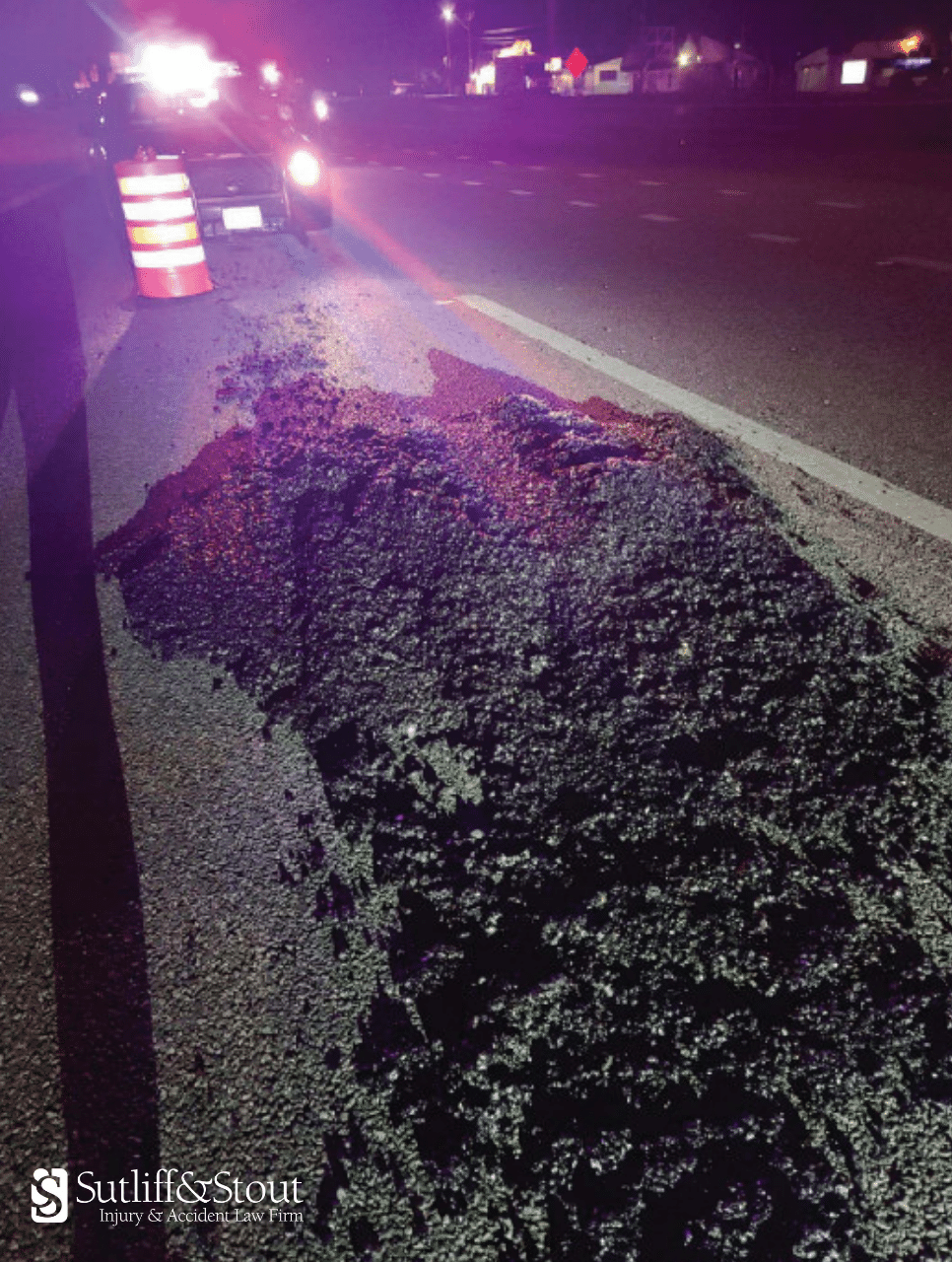
Poor road conditions include potholes, uneven pavement, loose gravel, and debris, which pose greater risks to motorcyclists than to other drivers. The Federal Highway Administration identifies road conditions as a contributing factor in nearly 25% of vehicle crashes. Motorcyclists in Texas tend to file claims against a government entity if it failed to maintain safe roadways, though these claims require proving gross negligence.

Claimants must report the exact location, include photographs of the road hazard, and document any prior complaints made to the city or county.
Weather conditions such as rain, fog, or high winds reduce traction and visibility, increasing crash risk. Data from the Texas Department of Transportation shows that over 13% of motorcycle accidents occur during adverse weather. Drivers are unable to control the weather, but they must adapt their driving behavior to the conditions.

Failure to adjust speed or maintain control establishes fault in an injury claim. The accident report must mention the specific weather at the time, any warnings issued, and how each party responded to the conditions.
Mechanical failures involve issues such as brake malfunction, tire blowouts, or engine problems that interfere with safe operation. The National Highway Traffic Safety Administration (NHTSA) attributes approximately 3% of motorcycle crashes to mechanical defects. Legal liability in Texas for mechanical failure falls on the manufacturer, a mechanic, or the motorcycle owner, depending on the source of the defect. Proving liability requires maintenance records, expert inspection reports, and documentation of part recalls or defective equipment.

Proving liability requires maintenance records, expert inspection reports, and documentation of part recalls or defective equipment.
Lack of visibility occurs when a driver fails to see a motorcyclist due to blind spots or poor visual awareness. Forty-two percent (42%) of fatal motorcycle collisions with other vehicles happen when a car turns left into the path of a motorcycle, according to a study by the Insurance Institute for Highway Safety (IIHS). Texas drivers are legally obligated to check mirrors and blind spots before changing lanes or turning.

Crash documentation must include diagrams, witness accounts, and any video footage showing the driver’s field of vision or failure to yield.
Dooring accidents occur when a parked driver or passenger opens a vehicle door directly into the path of an oncoming motorcycle. The sudden obstruction gives the motorcyclist no time to react. The type of crash is increasingly common in urban areas like Houston. Texas Transportation Code Section 545.418 prohibits opening a car door unless it is safe to do so.

The police report must indicate whether the door was opened into traffic and whether the occupant checked for oncoming vehicles.
Aggressive driving includes unsafe lane changes, tailgating, and verbal or physical threats directed at other road users. Road rage escalates these actions into intentionally harmful behavior. The AAA Foundation reports that aggressive driving contributes to 56% of fatal crashes nationwide. A motorcyclist injured by a hostile driver in Texas tends to pursue compensatory and punitive damages.

Evidence for the claims includes dashcam footage, eyewitness accounts, and prior incident reports involving the same driver.
Inexperience or lack of motorcycle training occurs when riders operate motorcycles without adequate skill development, safety knowledge, or proper licensing. The condition increases the likelihood of poor decision-making and unsafe maneuvers. Statistics from the National Highway Traffic Safety Administration (NHTSA) show that riders who complete formal training programs experience fewer accidents than untrained individuals. The Texas Transportation Code requires motorcycle operators to hold a Class M license and ride within their capabilities. Operating without proper credentials or exceeding one’s ability tends to influence fault determinations during legal proceedings.

Attorneys help strengthen a claim by gathering licensing and training documentation, interviewing witnesses regarding riding behavior, and consulting safety experts who evaluate the rider’s preparedness.
Lane splitting or filtering refers to the act of riding between lanes of slowed or stopped traffic. Texas prohibits lane splitting practice under House Bill 4122, which went into effect in September 2023. Warnings from the Texas Department of Transportation (TxDOT) and NHTSA highlight the elevated risk of collisions associated with lane splitting due to limited space and unpredictable vehicle movements. Texas recognizes lane splitting as a traffic violation, which leads to findings of comparative negligence in personal injury cases.

Attorneys handling the incidents collect evidence by reviewing police reports, securing traffic footage, obtaining eyewitness testimony, and photographing lane configurations to demonstrate the motorcycle’s positioning relative to surrounding vehicles.
Sudden stops by other drivers involve abrupt braking without adequate warning or justification, increasing the risk of rear-end collisions involving motorcycles. The risk becomes more significant due to motorcycles’ unique handling and braking mechanics. Data from TxDOT and NHTSA indicate that sudden stops contribute to a large portion of multi-vehicle motorcycle fatalities. The Texas Transportation Code prohibits unsafe or unjustified stops, though liability varies based on factors like following distance and traffic flow.

Legal teams help develop strong arguments by using dashcam footage, analyzing skid marks, photographing the crash site, and obtaining witness statements about the stop’s timing and context.
Improper group riding etiquette occurs when multiple motorcyclists ride without maintaining safe spacing, fail to communicate clearly, or execute uncoordinated maneuvers. The errors increase the risk of internal group collisions or crashes involving other vehicles. National findings link disorganized group riding to elevated accident risks, though Texas does not regulate group riding formations through specific statutes. Each rider remains responsible for individual actions under the general safe operation laws.

Attorneys help build a claim by gathering video evidence of the formation, documenting the group’s route, obtaining witness observations, and verifying whether the group used safety protocols like pre-ride meetings or communication tools.
The services that Houston Motorcycle Accident Lawyers offer are comprehensive legal solutions focused on protecting injured motorcyclists and pursuing maximum compensation for damages (medical expenses, lost income, pain and suffering, rehabilitation, and long-term care). Houston motorcycle accident attorneys (trial lawyers handling traumatic brain injuries or wrongful death) manage parts of the legal process, including accident investigation, evidence collection, and negotiations with insurance companies attempting to shift blame or reduce payouts. Legal professionals guide injured riders through available legal options and prevent damaging communication with insurance adjusters. Most Houston motorcycle injury firms operate on a contingency fee basis, ensuring clients owe no legal fees unless a financial recovery is made. Experienced lawyers specialize in cases involving negligent drivers, dangerous roads, defective motorcycle components, or severe injuries requiring extensive medical treatment. Legal teams provide responsive communication, free consultations, and custom legal strategies while challenging negative stereotypes about motorcyclists to ensure fair treatment during insurance claims or litigation.
Tort law provides the legal framework for determining liability, establishing fault, and awarding compensation in motorcycle accident cases in Houston. The governing statute is the Texas Civil Practice and Remedies Code, specifically Chapter 33 (Proportionate Responsibility) and Chapter 101 (Tort Claims Act). Chapter 101 states, “A governmental unit in the state is liable for… personal injury… caused by the wrongful act or omission or the negligence of an employee acting within his scope of employment if… the injury arises from the operation or use of a motor-driven vehicle,” which applies when a government employee (city maintenance truck driver) causes a crash during job duties. Chapter 33 establishes the modified comparative negligence rule, allowing a motorcycle accident victim to recover damages if the victim is not more than 50% at fault. The legal rule increases the injured motorcyclist’s chance of winning a claim by preserving eligibility even with shared responsibility.
The Texas tort system permits a plaintiff to recover economic damages (hospital bills, vehicle repairs, and lost income) and non-economic damages (physical pain and emotional distress). The State of Texas imposes a two-year statute of limitations on motorcycle accident lawsuits, which creates a time-based restriction that impacts claim viability. The proportionate responsibility doctrine allows an injured party to sue multiple defendants (a negligent car driver and a roadwork contractor), with a jury assigning fault percentages to each party. The jury’s distribution of fault directly affects the final compensation amount awarded to the injured motorcyclist. The outcomes reflect the structure and purpose of tort law, which governs the allocation of legal responsibility and financial recovery in personal injury disputes.
State-specific tort rules affect motorcycle accident claims in Texas by establishing legal deadlines, determining fault allocation, and setting liability standards that directly influence case outcomes. The State of Texas enforces a two-year statute of limitations for filing personal injury claims related to motorcycle accidents, with exceptions such as allowing minors two years from their 18th birthday. It sets a two-year limit from the date of death for wrongful death claims. Claims involving a government entity (city department operating a vehicle) follow stricter deadlines, sometimes as short as 45 days. The Texas modified comparative fault rule allows an injured motorcyclist to recover damages if the rider’s share of fault does not exceed 50 percent, with any compensation reduced in proportion to the rider’s degree of fault. The injured party must prove negligence by showing that a responsible entity (another driver, a property owner, or a road maintenance agency) breached a duty of reasonable care that caused the accident. The State of Texas requires helmet use for riders under age 21, and failure to follow the rule reduce compensation but does not eliminate the liability of negligent parties. Additional rules (damage caps under the Texas Tort Claims Act) apply to cases against public agencies and restrict recovery amounts. The specific tort laws govern the legal procedures, evidence requirements, fault analysis, and financial limits in motorcycle accident claims filed within Texas.
The legal rights motorcycle accident victims have in Houston are listed below.
Federal and state regulations that apply to motorcycle drivers in Houston are listed below.
Vicarious liability applies in Houston motorcycle accident lawsuits by allowing injured parties to hold third parties legally responsible for damages caused by someone else’s negligence under specific conditions defined by Texas law. The State of Texas has an employer vicariously liable when an employee causes a motorcycle accident while performing job-related duties, such as a delivery driver or service technician using a motorcycle for work. The Texas Tort Claims Act enforces the principle even when the third party did not personally cause the accident. The parent of a minor is held liable when the minor operates a motorcycle owned by the parent and causes a crash. The vehicle owner is held responsible whether the person had explicit permission to use the motorcycle. The legal rule allows a motorcycle accident victim to pursue compensation from the third party without needing to prove that the third party directly committed a negligent act. The doctrine of vicarious liability expands financial recovery options by targeting individuals or entities (companies or parents) with higher insurance coverage and stronger financial resources than the directly at-fault motorcyclist.
Yes, multiple parties can be sued in a single motorcycle accident case under Texas law, which permits victims to pursue compensation from any person or entity that contributed to the crash. Texas uses a comparative fault system, allowing courts to divide liability among responsible parties based on their percentage of fault. A motorcyclist is permitted to name negligent drivers (speeding car drivers), employers (delivery companies whose employees caused the accident), motorcycle manufacturers (companies that produced defective brakes), government entities (Texas Department of Transportation for failing to repair potholes), and alcohol-serving establishments (bars liable under dram shop laws for overserving intoxicated drivers) in one lawsuit. Texas’s modified joint and several liability rules under tort law allow the court to assign full financial responsibility to any party found to be more than 50% at fault, even if other parties share blame. The legal structure allows plaintiffs to access compensation from multiple insurance policies. It protects against the risk of one defendant lacking sufficient assets or coverage by holding other liable parties financially accountable.
You can find a reliable motorcycle accident attorney near you by checking the regions listed below.
Houston, TX:
Motorcycle accident attorneys in Houston assist with injury claims involving severe trauma, insurance disputes, and at-fault driver investigations. The office is located at 550 Post Oak Blvd, Suite 530, Houston, TX 77027, where legal professionals prepare documentation, negotiate settlements, and represent injured riders in court.
Austin, TX:
Attorneys in Austin provide legal support for motorcycle crash victims dealing with medical expenses, disability, and property loss. Services are available near 3600 Bee Caves Rd, Suite 102, Austin, TX 78746. Legal teams guide clients through claim processes and fight for full compensation after collisions.
Marble Falls, TX:
Legal experts in Marble Falls focus on motorcycle accident cases involving broken bones, spinal injuries, or wrongful death. The office is located at 100 Avenue H, Suite 205, Marble Falls, TX 78654, to handle claims involving negligence, road hazards, or uninsured motorists.
San Angelo, TX:
San Angelo attorneys help riders injured by reckless driving, mechanical failures, or poor road conditions. Legal services are available at 202 W Beauregard Ave, San Angelo, TX 76903, where attorneys gather evidence, file claims, and negotiate compensation packages.
Cypress, TX:
Law firms in Cypress support victims of motorcycle crashes resulting from speeding, tailgating, or unsafe lane changes. The office is located at 12300 Dundee Ct, Suite 203, Cypress, TX 77429, to assist clients with proving liability, estimating long-term costs, and securing damages through settlement or trial
You should bring all documents and information related to the motorcycle accident to your first meeting with a Houston motorcycle accident lawyer. Required materials include medical records and bills such as emergency room reports, ambulance service receipts, repair estimates or invoices for motorcycle damage, and a copy of the police accident report. Include photos or videos showing the crash site, visible injuries, or motorcycle damage. Provide insurance policy details for all involved drivers, along with documentation of lost income such as timesheets, payroll records, or letters from an employer. Prepare a list of witnesses, including names and contact information.
Submit a written statement describing the sequence of events during the accident and explaining how the injuries affect daily life activities. Provide copies of all communication with insurance companies, including emails, letters, and claim summaries. Bring supporting documents such as signed witness statements, physician prognosis notes, or photos showing hazards like road defects or weather conditions. A lawyer uses the information to evaluate legal options, determine the value of damages, and establish a foundation for a strong compensation strategy.
Legal services included when hiring a motorcycle accident attorney are listed below.
Yes, a Houston attorney offers 24/7 availability for motorcycle injury cases. Motorcycle accident attorneys in Houston offer 24/7 availability to injured motorcyclists through phone, email, or virtual consultations, providing immediate legal guidance after a crash. Round-the-clock access allows attorneys to preserve evidence, communicate with insurance adjusters, and meet legal deadlines. Early intervention supports stronger cases by securing accident scene details, police reports, and witness statements before they are lost or altered.
Yes, you can switch lawyers if you are unhappy with your current one. Any injured motorcyclist has the legal right to switch lawyers during a case if the current attorney fails to provide adequate support, such as through delayed communication or missed updates. New attorneys (a personal injury specialist) review the claim, retrieve necessary documents, and continue case proceedings without disrupting legal progress. A transition involves signing a consent form and reviewing any financial agreements in place.
Yes, your case is strong enough to contact a motorcycle accident attorney if injuries occurred due to another party’s negligence, such as distracted driving or failure to yield. Attorneys assess factors like medical records, witness accounts, and traffic citations to determine claim strength. Prompt legal evaluation ensures evidence is preserved, filing deadlines are met, and injured riders gain support for recovering damages, including hospital bills, lost income, and emotional distress.
The best ways to find a motorcycle accident attorney in Houston are listed below.
Our experienced attorneys are ready to help you recover the compensation you deserve. Contact any of our office locations to schedule your free consultation.