Bus Accidents
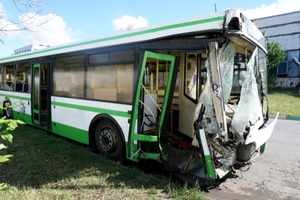
A bus accident is a collision involving a public or private bus that results in injury, property damage, or death. A bus accident often involves multiple passengers, commercial liability, and sometimes a government entity as a responsible party. The involvement of multiple passengers means a single crash can create multiple separate injury claims at once. Bus crashes involving a government owned transit system can also raise additional notice requirements before a claim may proceed. A city bus that collides with a car during rush hour may create claims from multiple passengers in addition to the driver of the other vehicle.
What are Bus Accidents in Legal Terms?
A bus accident in legal terms is an incident involving a bus that causes harm to a passenger, pedestrian, or another driver. A bus accident in legal terms includes any collision, rollover, or mechanical failure connected to a public or private bus. The incident may lead to a personal injury claim or, in the most severe cases, a wrongful death claim. The wrongful death claim can arise when a passenger, pedestrian, or another driver dies as a direct result of the crash. A bus that rolls over during a sharp turn may create personal injury claims from multiple passengers and a wrongful death claim if a fatality occurs.
What Laws Regulate Bus Accident Claims?
Bus accident claims are regulated by traffic laws, commercial vehicle regulations, and public transportation rules. Bus accident claims fall under the same traffic laws that apply to any vehicle on the road. The commercial vehicle regulations set specific maintenance, licensing, and safety requirements for bus operators. Buses classified as common carriers face additional oversight, since the law holds a common carrier to a higher standard of care for passenger safety. A bus company that fails to meet the higher standard of care expected of a common carrier may face liability even for a relatively minor collision.
Are Bus Accidents Considered Personal Injury Cases?
Yes, bus accidents are considered personal injury claims when the crash causes physical harm to a passenger or another party. Bus accidents are treated as personal injury claims because the injured party suffers physical harm connected to another party's conduct. The classification allows an injured party to seek compensation for medical bills, lost wages, and pain from the injury. The classification also allows an injured party to work with a personal injury attorney who identifies every responsible party connected to the crash. A passenger injured when a bus driver runs a red light may file a personal injury claim against the driver and the bus company.
What Causes Bus Accidents?
Bus accidents commonly result from four major contributing factors on the road.
1. Driver error. Driver error occurs when a bus operator misjudges distance, ignores a signal, or reacts too slowly to traffic.
2. Fatigue. Fatigue occurs when a driver operates a bus without adequate rest, slowing reaction time and impairing judgment significantly.
3. Mechanical failure. Mechanical failure includes brake malfunctions, tire blowouts, or steering problems that make a bus difficult to control safely.
4. Road conditions. Road conditions such as potholes, poor lighting, or wet pavement can cause a bus driver to lose control.
These factors often combine, since a fatigued or distracted driver is also more likely to miss a mechanical warning sign or road hazard.
How Does Driver Fatigue Lead to Bus Crashes?
Driver fatigue leads to bus crashes by slowing reaction time and impairing judgment behind the wheel. Driver fatigue leads to bus crashes when a driver exceeds legal hours of service limits without adequate rest. The impaired judgment can cause a driver to drift out of a lane or miss a warning sign entirely. The risk increases significantly during early morning or late night routes, when the body's natural sleep cycle works against staying alert. A driver who continues past the legal hours of service limit may fall asleep briefly and drift into oncoming traffic.
Can Distracted Driving Cause Bus Accidents?
Yes, distracted driving can cause bus accidents by diverting a driver's attention from the road. Distracted driving can cause bus accidents when a driver checks a phone, radio, or dispatch device while moving. The diverted attention reduces the time a driver has to notice and respond to sudden traffic changes. The distraction can last only a few seconds, yet a bus can travel a significant distance before the driver looks back at the road. A driver who glances at a dispatch message for a few seconds may fail to notice stopped traffic ahead and cause a collision.
What are the Different Types of Bus Accidents?
Bus accidents commonly fall into three recognized types of incidents.
1. Passenger injuries. Passenger injuries occur when sudden braking, a collision, or a fall inside the bus harms a rider unexpectedly.
2. Rollover accidents. Rollover accidents happen when a bus tips onto its side or roof after a sharp turn at excessive speed.
3. Collisions with other vehicles. Collisions with other vehicles occur when a bus strikes or is struck by a car, truck, or motorcycle.
Classification depends on the incident type, since the physics and evidence differ between a rollover, a collision, and an internal passenger injury.
How Do Bus Accidents Differ from Car Accidents?
Bus accidents differ from car accidents mainly through the number of people involved and the parties who may be liable. Bus accidents differ from car accidents because a single crash can injure many passengers at once rather than just a driver and passenger. The number of potential parties often includes the driver, the bus company, a maintenance provider, and sometimes a government entity. The claims process also differs because a government owned bus system may require a formal notice before a lawsuit can proceed. A city bus crash may create separate claims from a dozen passengers, while a typical car accident usually involves only the two drivers.
Who is Liable in a Bus Accident?
Liability in a bus accident can fall on the driver, the bus company, a maintenance provider, or a government entity. Liability in a bus accident often depends on which party's actions or failures directly caused the crash. The shared responsibility can extend to a maintenance company when a mechanical defect went unrepaired before the crash. The liability determination often relies on maintenance records, driver logs, and any available onboard camera footage. A crash caused by worn brakes that were never repaired may create liability for the maintenance provider in addition to the bus company.
Why are Bus Accident Claims More Complex?
Bus accident claims are more complex because more than one party can share responsibility for a single crash. Bus accident claims are more complex because multiple passengers may each file a separate claim from the same incident. The complexity increases further when a government entity operates the bus, since government claims often follow different rules and deadlines. The different rules can include a shorter notice period, a specific claims form, or a cap on the total damages available. A passenger injured on a government operated transit bus may need to file a formal notice within a short deadline before pursuing a lawsuit.
What Makes Bus Accident Cases Unique?
Bus accident cases are unique because a single incident can involve dozens of injured passengers at once. Bus accident cases are unique because the bus company's status as a common carrier raises its duty of care to passengers. The higher duty of care means a bus operator must take greater precautions than an ordinary driver on the road. The heightened duty can make it easier for an injured passenger to prove the bus company fell short of its legal obligations. A bus that pulls away from a stop before a seated passenger is secure may violate the higher duty of care owed to that passenger.
Can Bus Accidents Involve Government Liability?
Yes, bus accidents can involve government liability when a public transit agency operates the bus. Bus accidents can involve government liability when the crash results from a public agency's negligence or a policy failure. The government liability often comes with specific procedural rules that differ from a claim against a private company. A claim against a government agency may require filing a formal notice within a short deadline before any lawsuit can proceed. A passenger injured on a public transit bus may need to file a notice of claim within a matter of months to preserve the right to sue.
What Injuries are Common in Bus Accidents?
Bus accidents commonly cause three types of physical injuries in a collision.
1. Fractures. Fractures occur when the force of a collision or a sudden stop breaks bones, often requiring surgery afterward.
2. Head injuries. Head injuries range from concussions to traumatic brain injuries, sometimes causing lasting cognitive or memory problems for passengers.
3. Soft tissue injuries. Soft tissue injuries include strains and sprains caused by sudden braking or the force of a collision itself.
Severity varies, since a sudden stop inside a bus often causes different injuries than a direct collision with another vehicle.
What Should You Do After a Bus Accident?
A person should seek medical care, report the incident, and gather evidence after a bus accident. A person should seek medical care immediately, even when injuries seem minor at first. The report to the bus company or transit agency creates an official record connecting the crash to the parties involved. The documentation should include photos of the bus, the road conditions, and any visible injuries before evidence disappears. A passenger who photographs the bus number and the scene of the crash immediately afterward helps identify the responsible company later.
When should you Contact a Lawyer after a Bus Accident?
A person should contact a lawyer soon after a bus accident to help protect the claim. Early legal advice helps a person preserve evidence before it becomes unavailable or difficult to obtain. The early evaluation covers liability, insurance coverage, and the extent of the person's damages. The evaluation becomes especially important when a government entity operates the bus, since a claim against a public agency often carries a short filing deadline. A passenger who contacts a lawyer within days of a bus crash may better preserve onboard camera footage before it is deleted.
What Evidence is Used in Bus Accident Cases?
Bus accident cases commonly rely on three main evidence types.
1. Police reports. Police reports document the officer's observations, statements from those involved, and the initial cause of the crash itself.
2. Witness statements. Witness statements provide an outside account of the crash, often confirming details the involved parties may dispute later.
3. Onboard camera footage. Onboard camera footage often captures the moments before and during the crash, showing driver behavior and road conditions.
Each type of evidence strengthens a claim differently, since a court weighs official records alongside personal accounts and recorded footage of the crash.
What Compensation is Available After a Bus Accident?
Bus accident victims can pursue three main types of compensation.
1. Medical expenses. Medical expenses cover hospital bills, surgery, physical therapy, and any ongoing treatment connected to the accident itself.
2. Lost wages. Lost wages reflect income missed during recovery, including time away from work for medical appointments and treatment sessions.
3. Pain and suffering. Pain and suffering reflects the physical pain and emotional distress a victim experiences because of the injury sustained.
Compensation depends on damages actually suffered, since compensatory damages correspond directly to documented medical, financial, and personal harm.
What Defenses are Used in Bus Accident Cases?
Bus accident cases commonly involve two recognized types of legal defenses.
1. Comparative fault. Comparative fault applies when the injured party's actions contributed to the crash, reducing the amount of recoverable compensation.
2. Lack of negligence. Lack of negligence argues the driver followed all required safety standards before and during the crash entirely.
Defenses vary based on facts, since a court weighs each party's conduct before assigning fault in a bus accident case.
How Do Bus Accident Claims Work?
A bus accident claim typically begins with filing a report and gathering evidence of the crash. A bus accident claim typically proceeds through an insurance review before moving toward a lawsuit if needed. The evidence gathering stage includes medical records, witness statements, and any available photos or video of the incident. The claim can lead to a negotiated settlement or, if the parties cannot agree, a trial before a judge or jury. A passenger and an insurance company may reach a settlement before trial once both sides review the medical evidence and onboard footage.
Do Bus Accident Cases Go to Trial?
Many bus accident cases settle before ever going to trial. Many bus accident cases settle once the insurance company and the injured party agree on a fair compensation amount. The settlement process often moves faster than a trial and avoids the uncertainty of a jury decision. An out-of-court settlement can still result in a full recovery for the victim's medical bills, lost wages, and other damages. A passenger with clear medical records and photos of the injury often reaches a settlement without ever appearing in court, though some disputed cases still proceed to trial.